
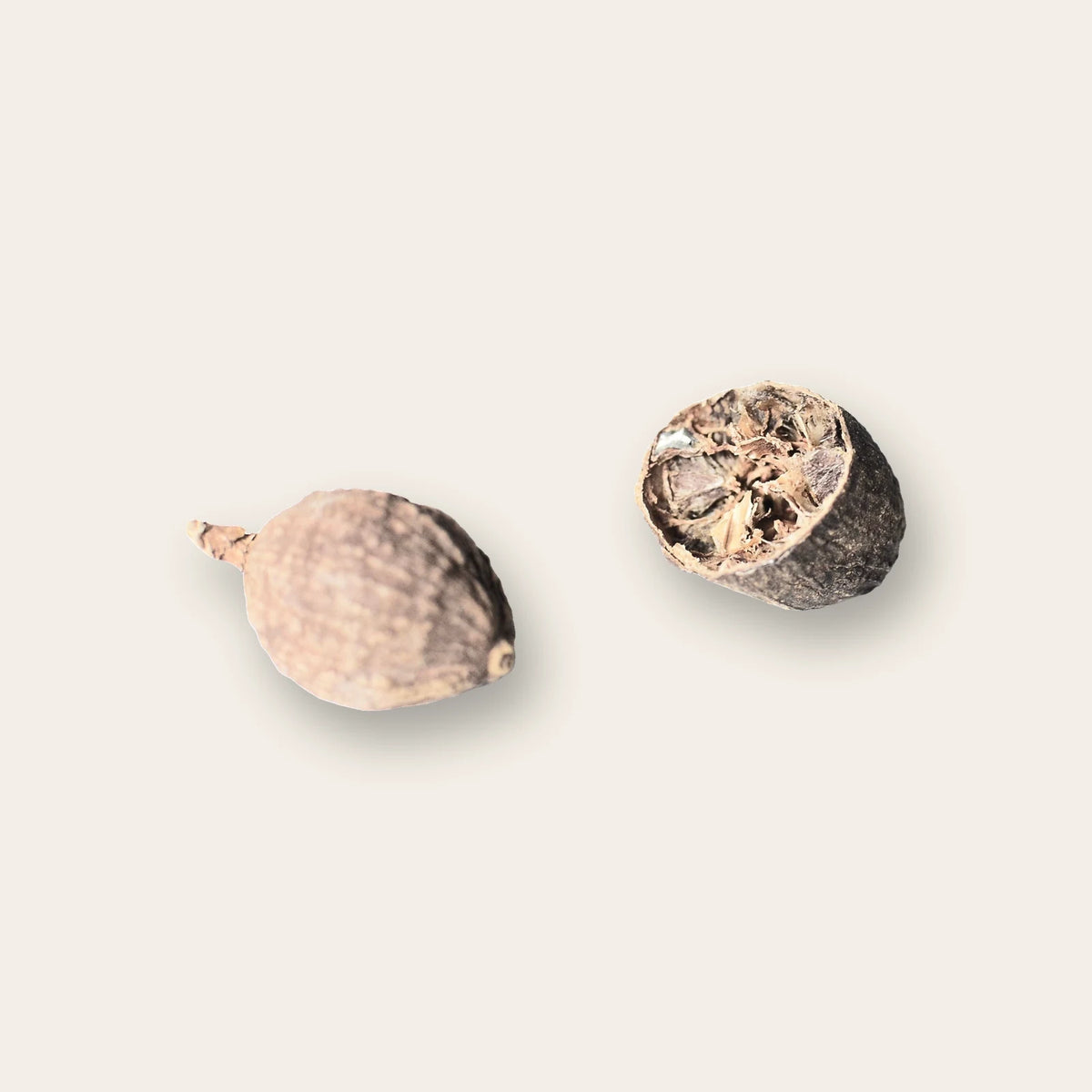
INGREDIENT GLOSSARY
Nutmeg
Myristica fragrans · Nutmeg family (Myristicaceae)
Warm, spicy and slightly sweet, with a woody-resinous, almost peppery sparkle.
NATURALSPICY · AMBER (ORIENTAL) · TOP NOTE
AT A GLANCE
- Plant: seed of the nutmeg tree Myristica fragrans (nutmeg family)
- Origin: Banda Islands (Moluccas), today mainly Indonesia and Grenada
- Production: dried, ground nuts, steam-distilled
- Scent: warm, spicy, slightly sweet, fresh and terpenic – a top note
PROFILE
- Origin
- Banda Islands in the Moluccas, Indonesia · raw material today mainly from Indonesia, also from Grenada, India and Sri Lanka
- Extraction
- Dried seeds are ground and steam-distilled – often from broken nuts sorted out of the spice trade
- Main molecules
- Sabinene (C₁₀H₁₆)
- Harvest
- Nutmeg trees bear fruit all year round; the main harvest falls in different months depending on the growing region.
- Often paired with
- Patchouli, vanilla, cedarwood, bergamot, musk, sandalwood, amber
Numbers that surprise
around 18 times
the size of the nutmeg island of Run – that is Manhattan, and yet tiny Run was fought over for years in the 17th century.
around 10 kg
of nutmegs yield roughly 1 kg of essential oil by steam distillation – and even sorted-out, broken nuts will do.
at least 2.7 sextillion
terpene molecules with the formula C₁₀H₁₆ are packed into a single gram of nutmeg oil – 27 followed by 20 zeros.
Rounded values; calculation based on published data.
Harvest and season
Nutmeg trees bear fruit all year round; the main harvest falls in different months depending on the growing region. After harvest the nuts dry for several weeks before they are cracked, ground and distilled.
Ripe fruits split open while still on the tree, and the seed and mace fall out and are gathered. The red seed covering is peeled off and dried on its own; the nuts dry for several weeks before their hard shell is cracked. For perfumery, the dried nuts are ground and steam-distilled – mostly broken, worm-eaten or otherwise unsaleable nuts end up in the still. The seeds contain around 5 to 15% essential oil.
Knowledge to share
Myth or truth?
Statement 1
Nutmeg is a nut.
Myth. Botanically it is the seed of a fruit that splits open. The red covering around it is mace.
Statement 2
Nutmeg and mace come from the same fruit.
True. Mace is the red, net-like seed covering that wraps the nutmeg inside the fruit; the two are dried separately and traded as spices in their own right.
Statement 3
Nutmeg oil is distilled only from the finest nuts.
Myth. It is precisely the broken, worm-eaten or otherwise unsaleable nuts that go into the still – the flawless ones are sold as spice.
Your result
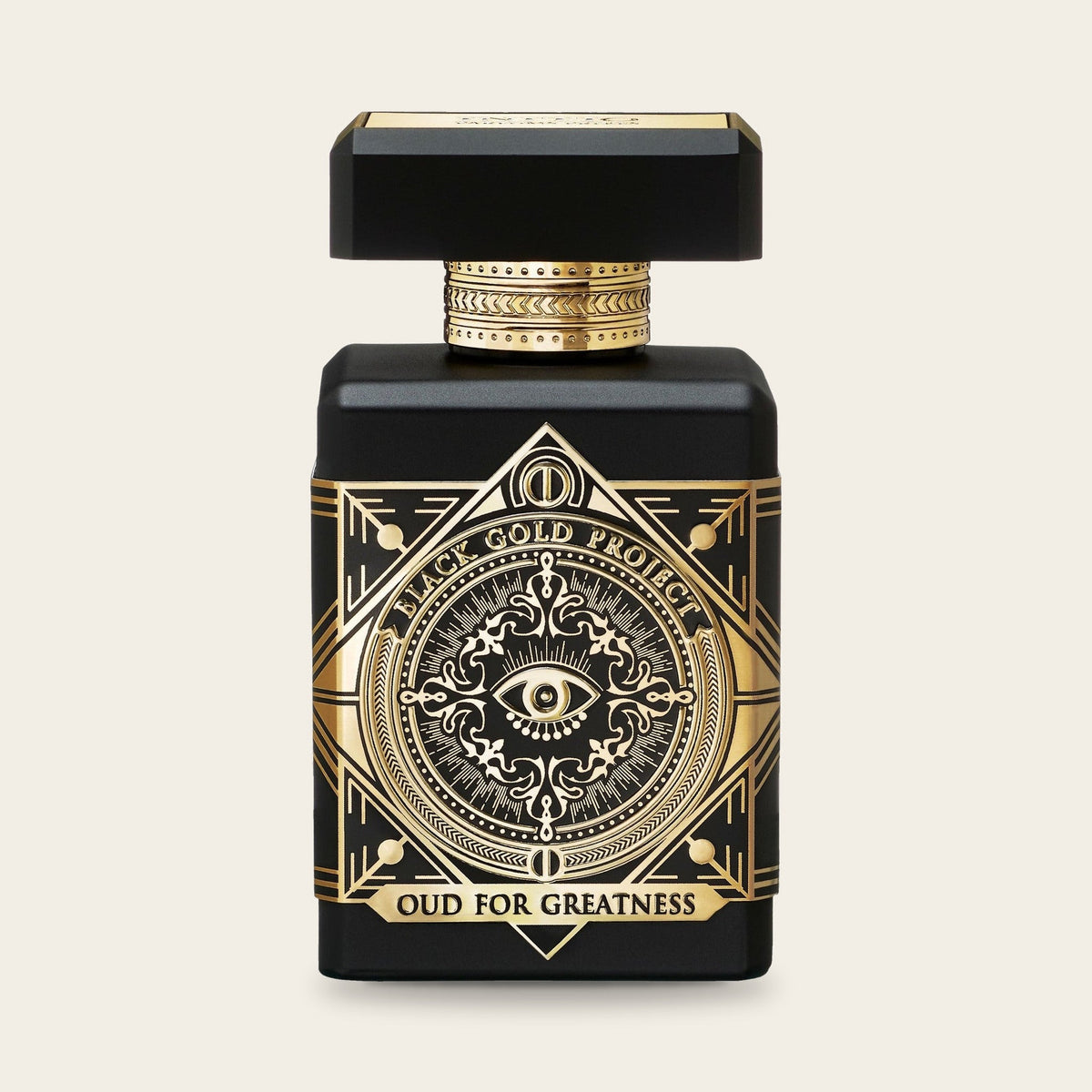
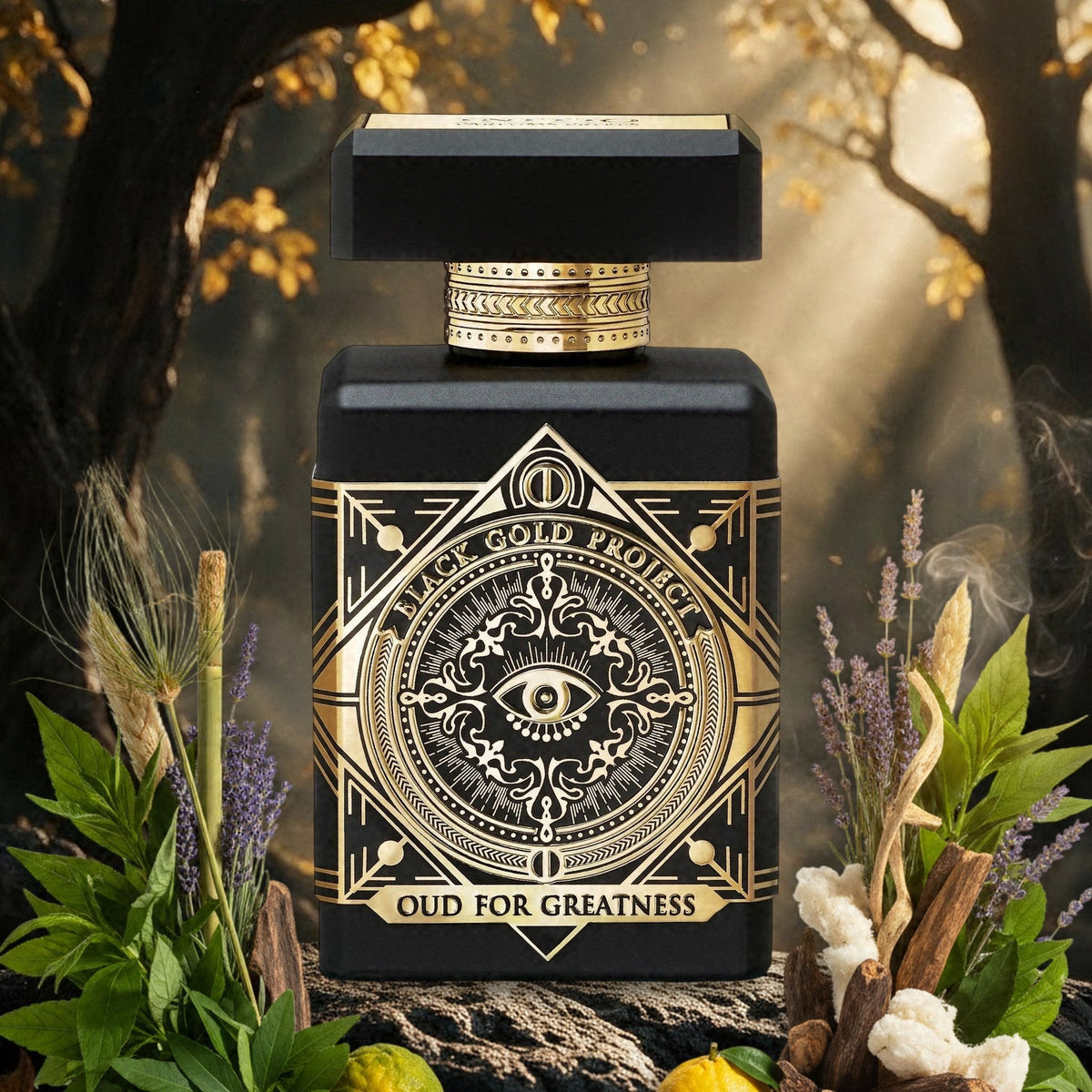
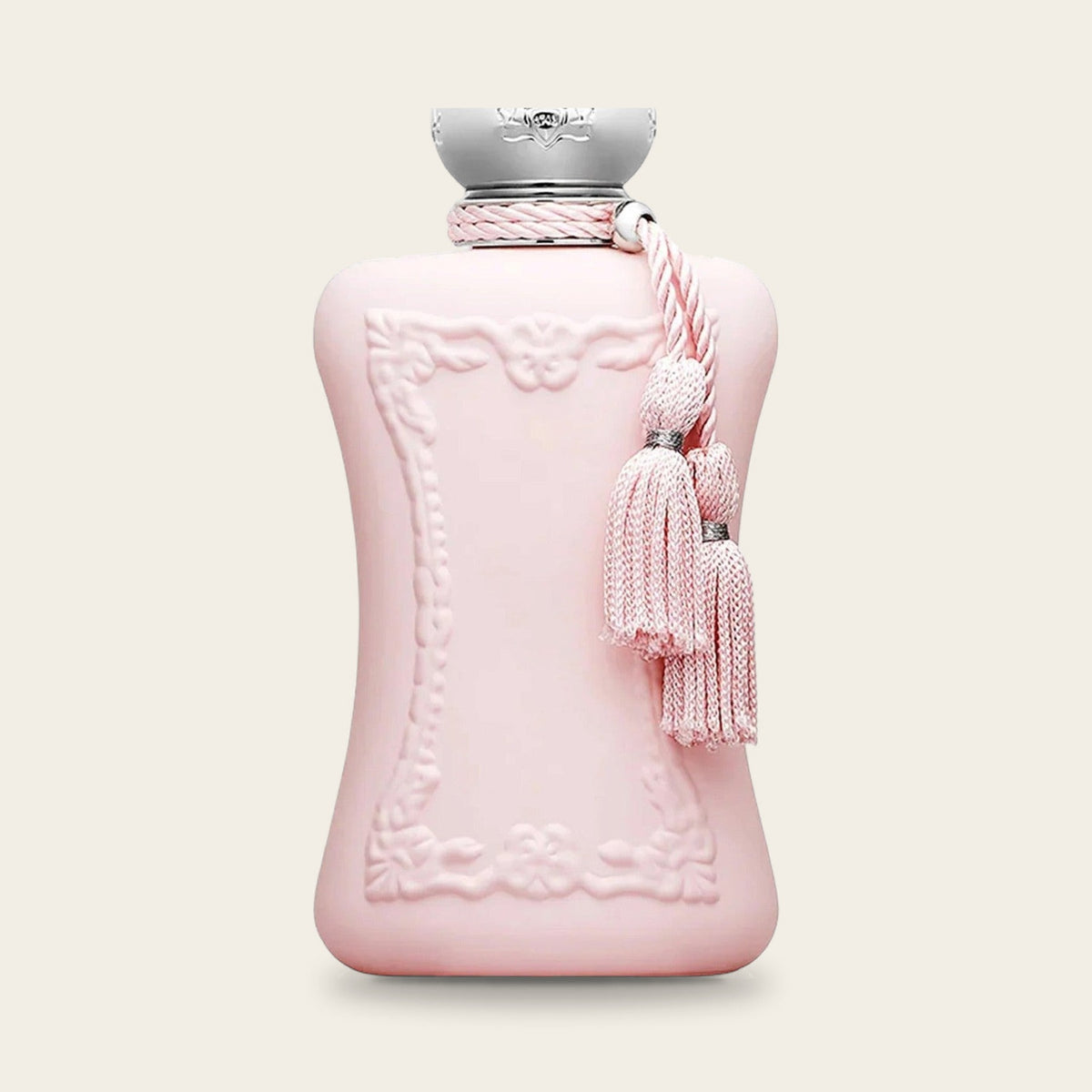
FRAGRANCES WITH NUTMEGINGREDIENT GLOSSARY
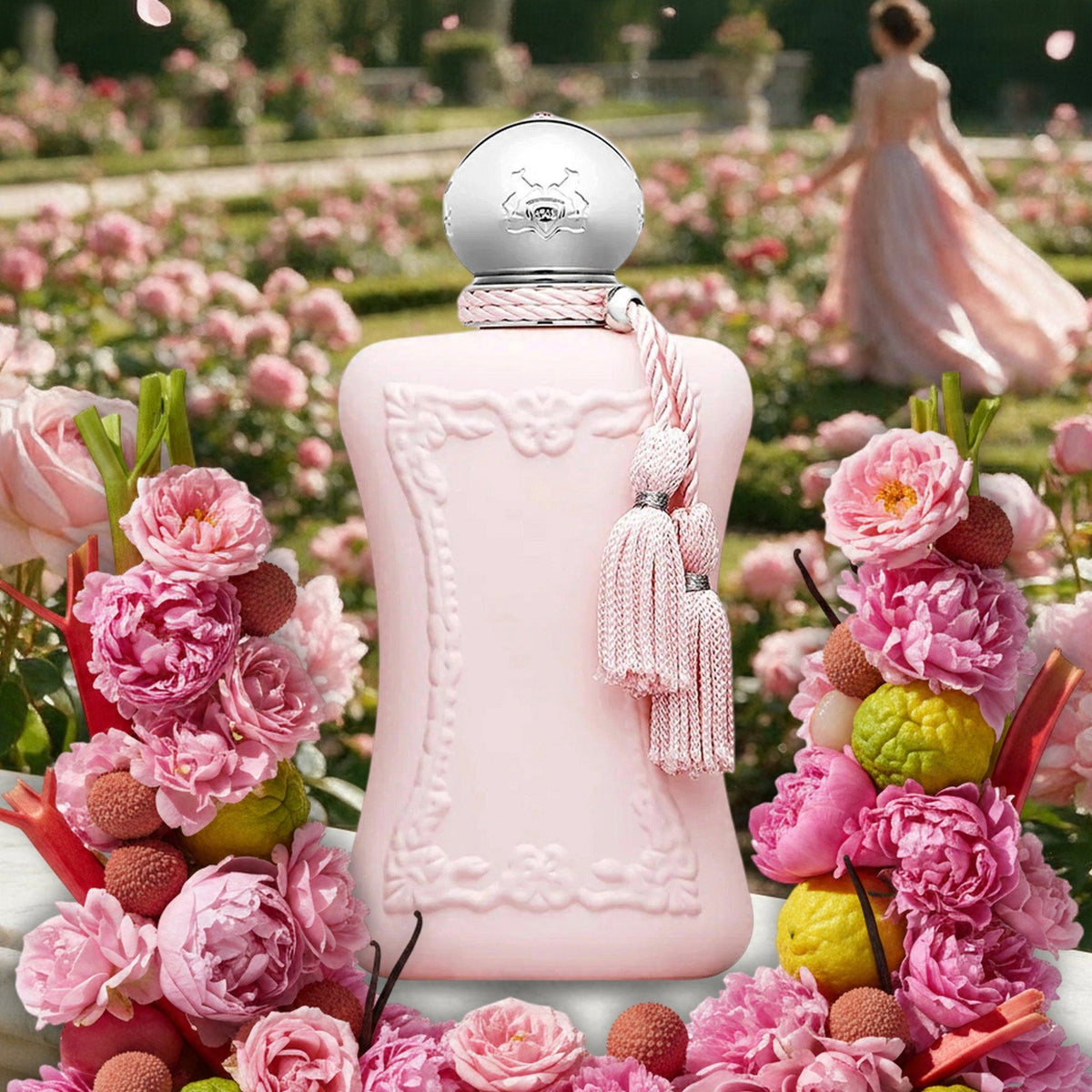
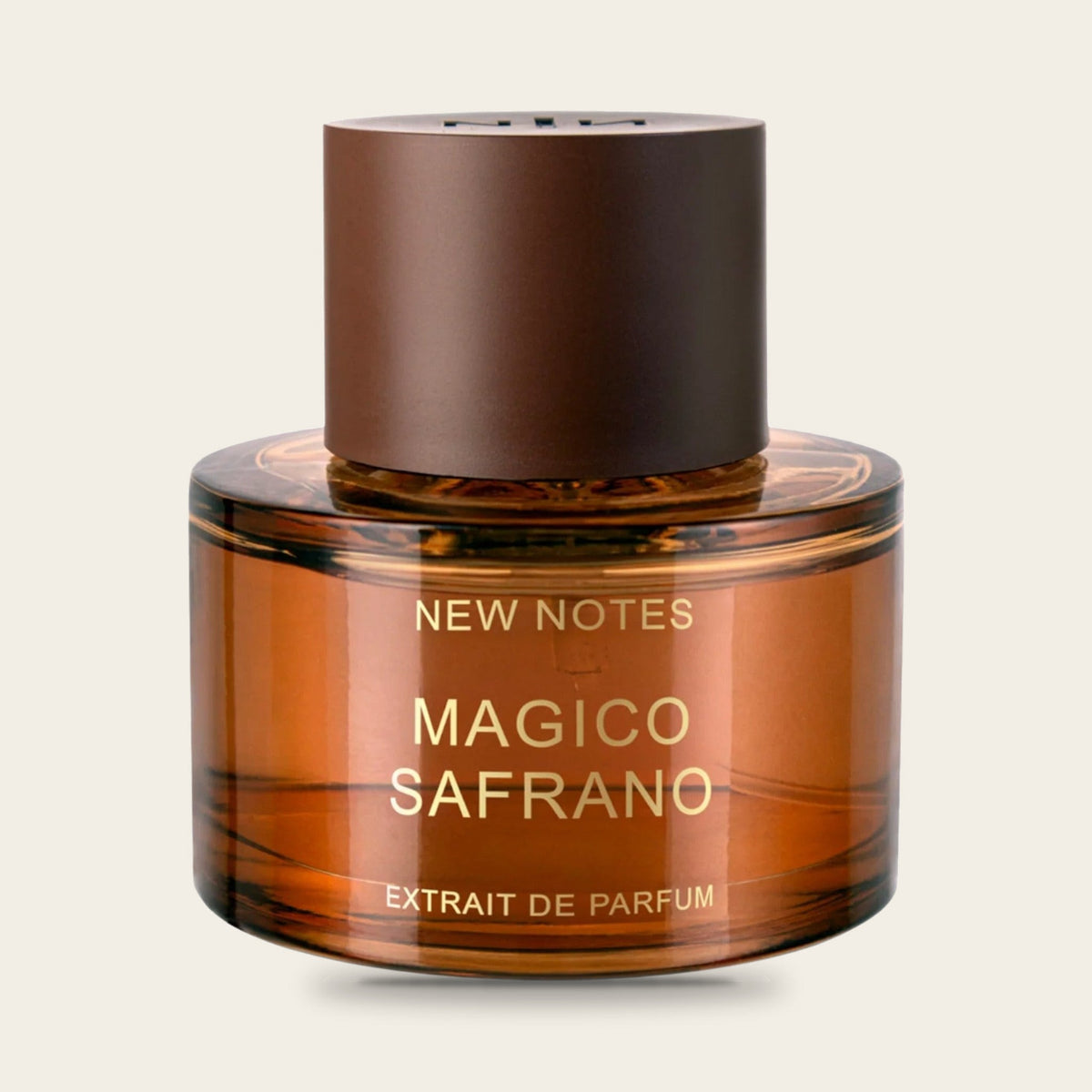
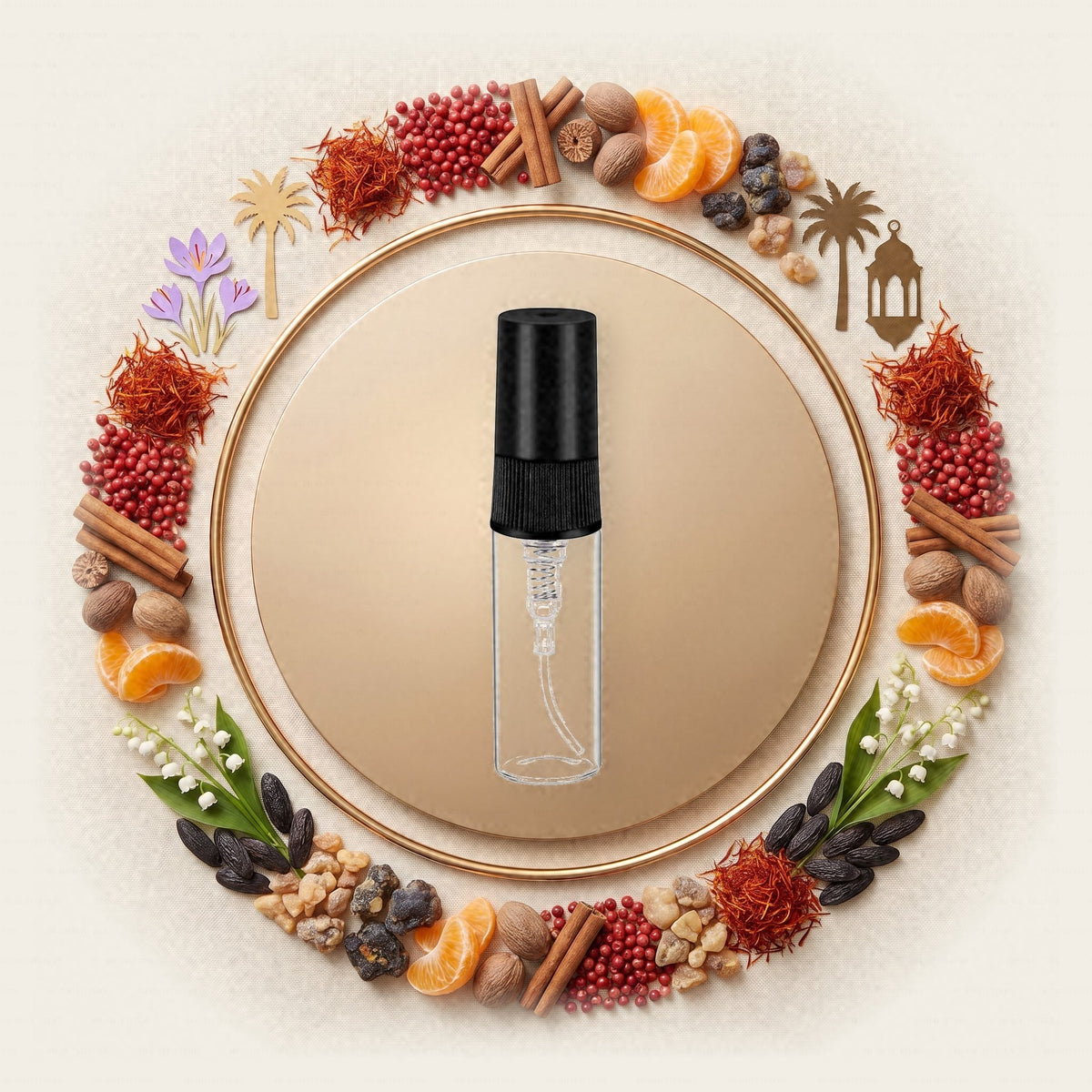
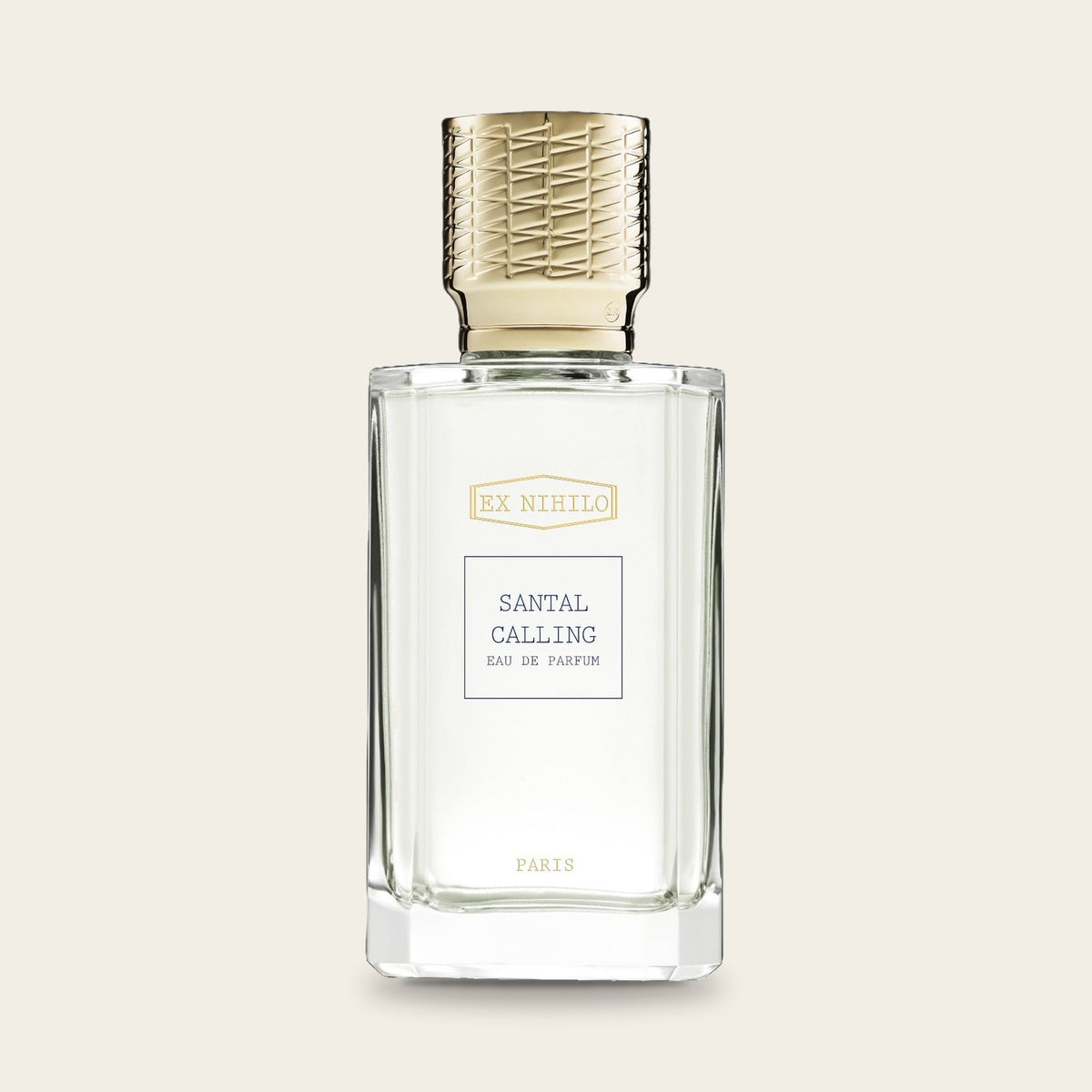
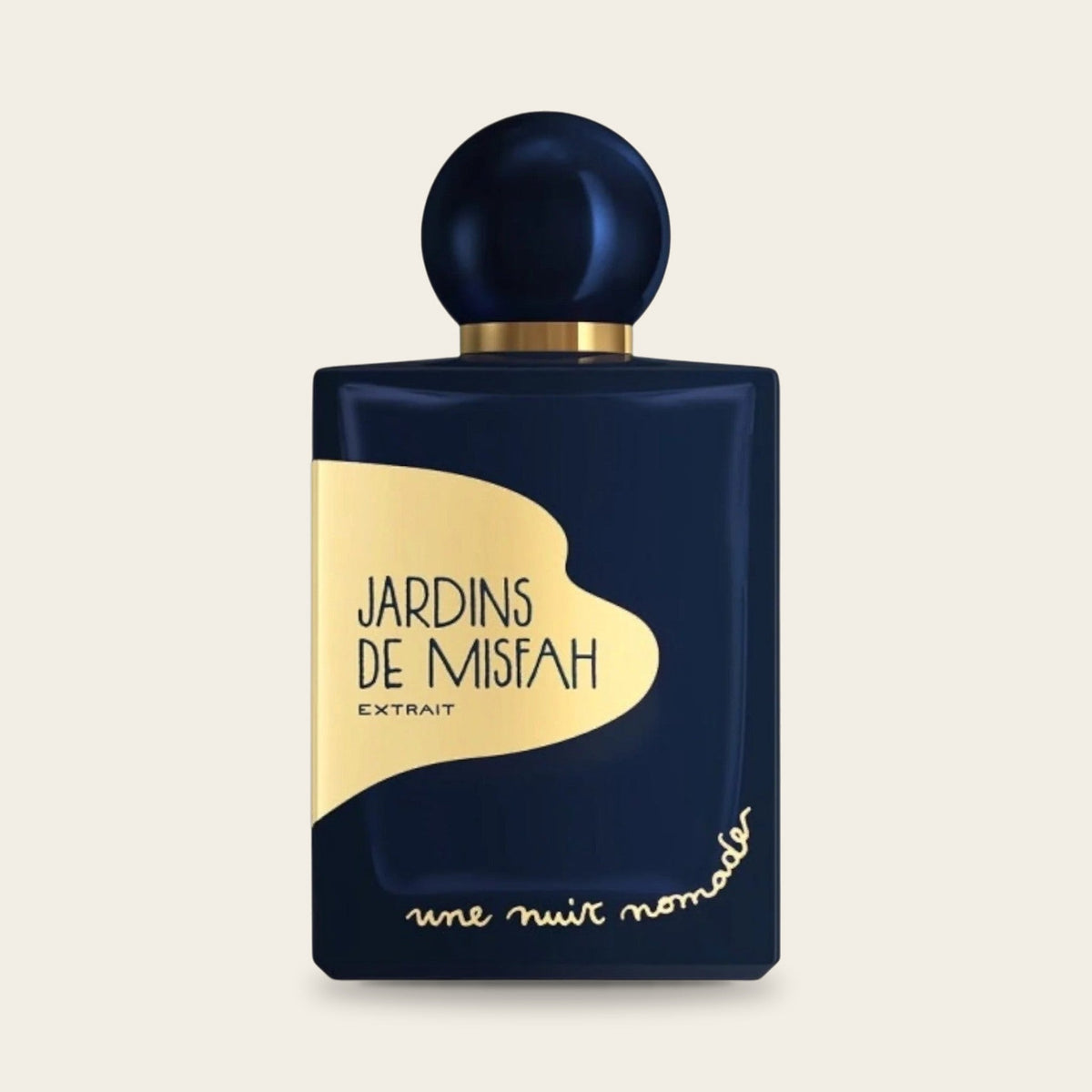
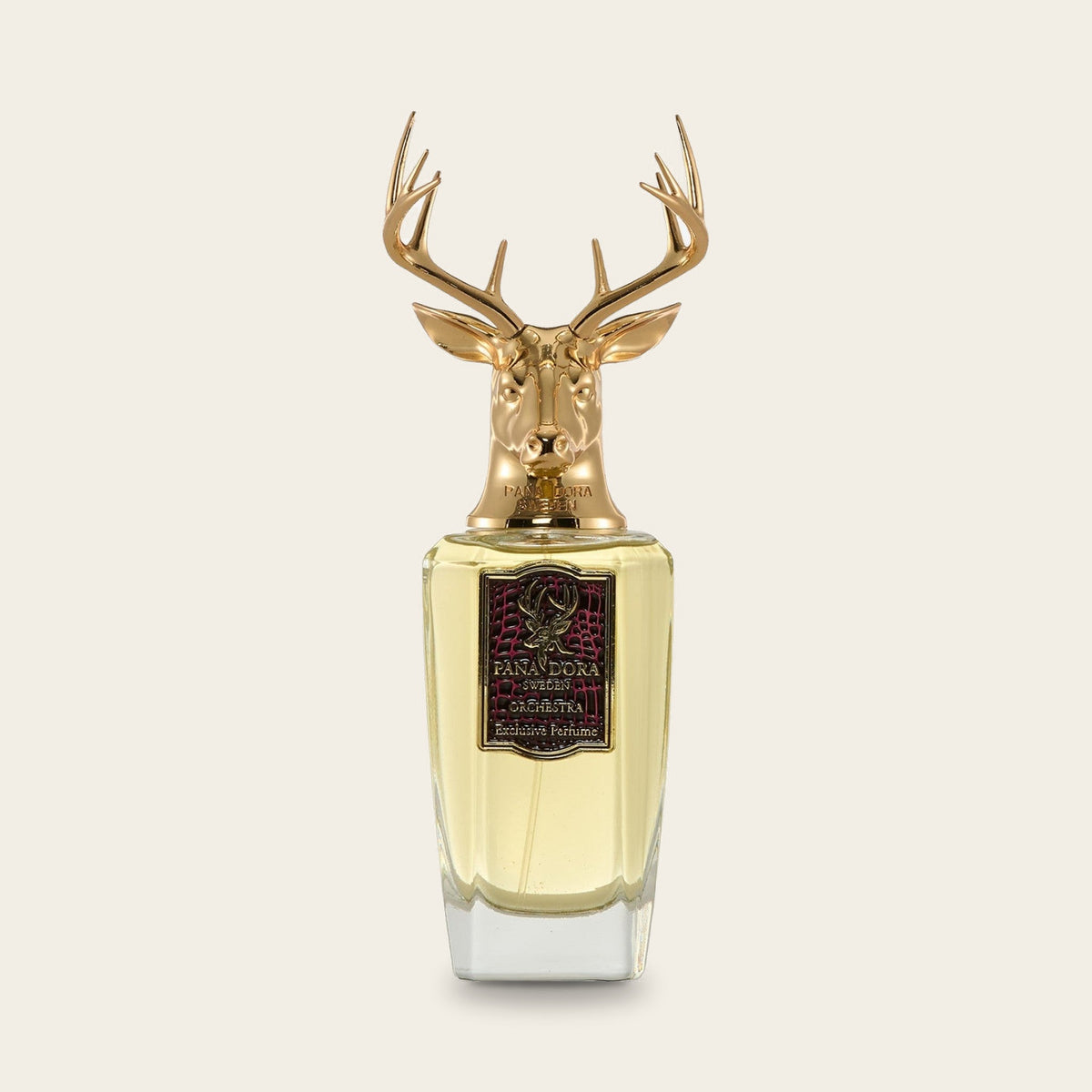
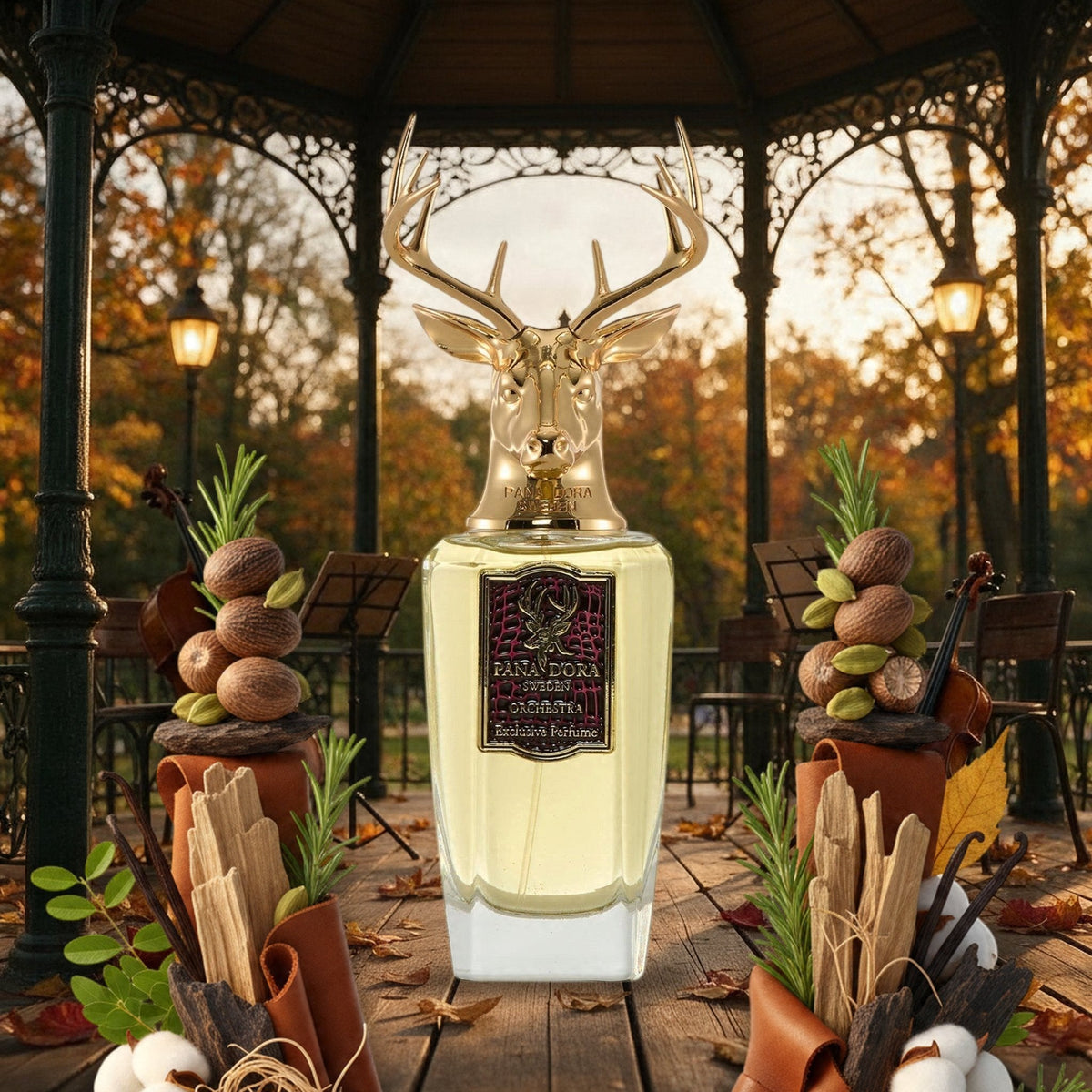
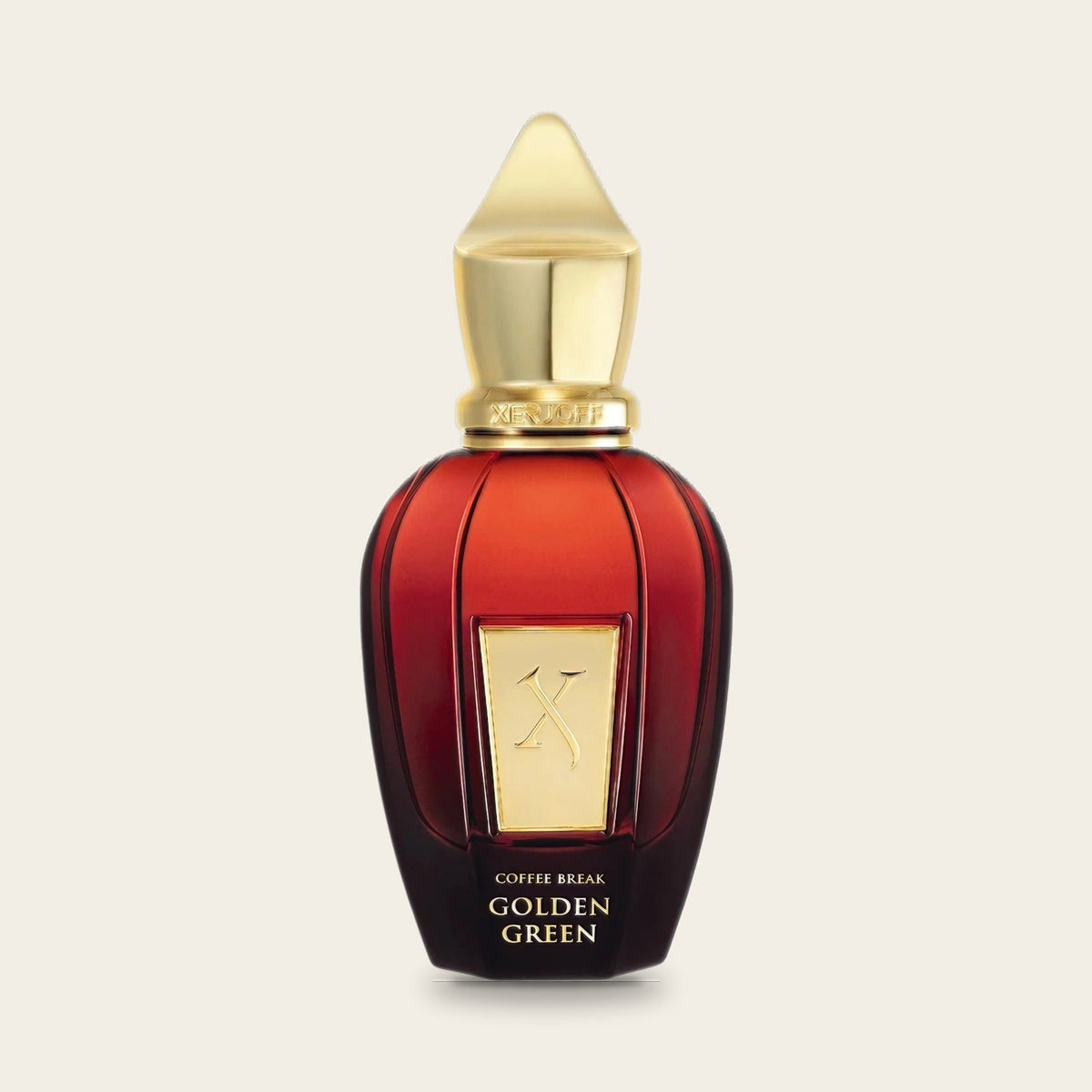
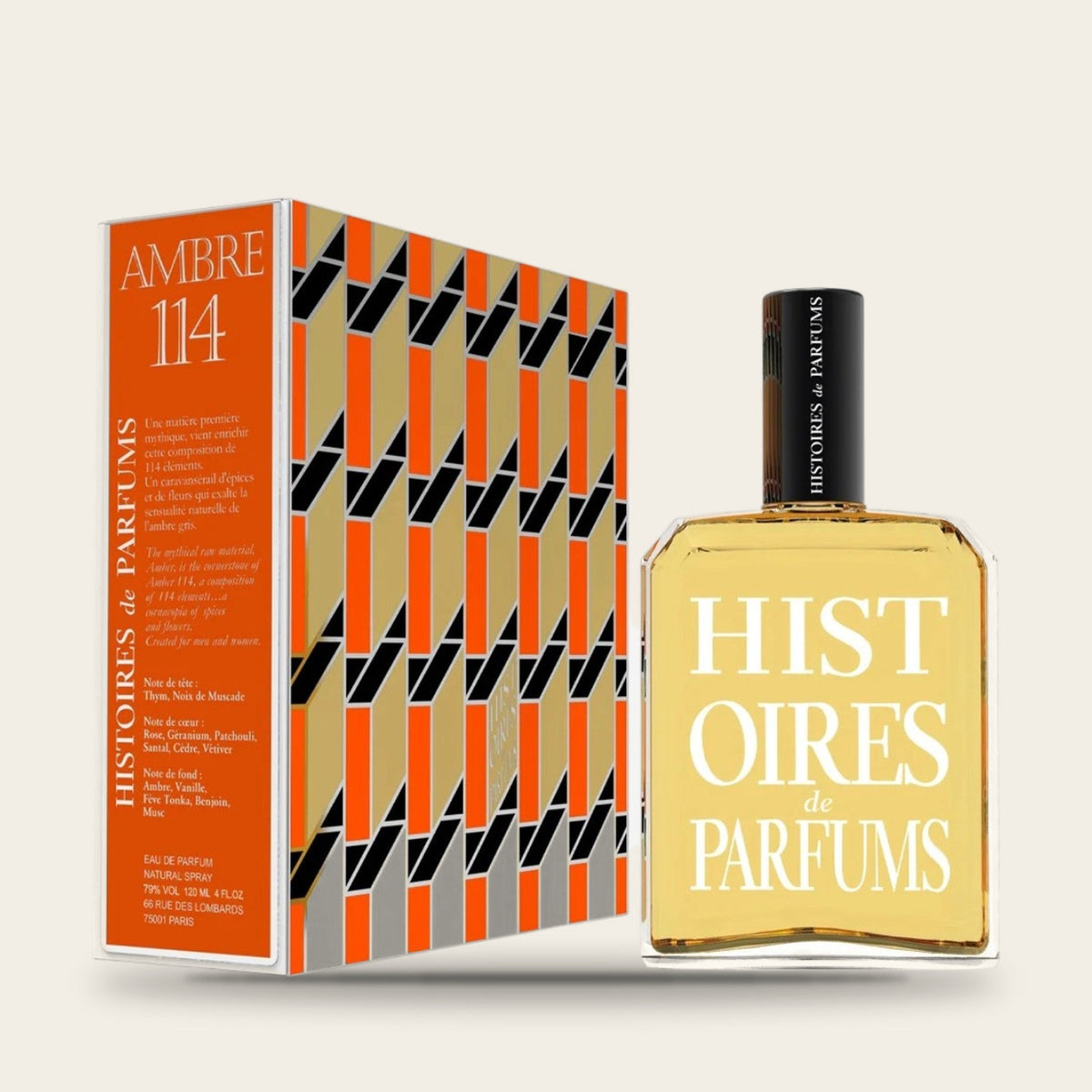
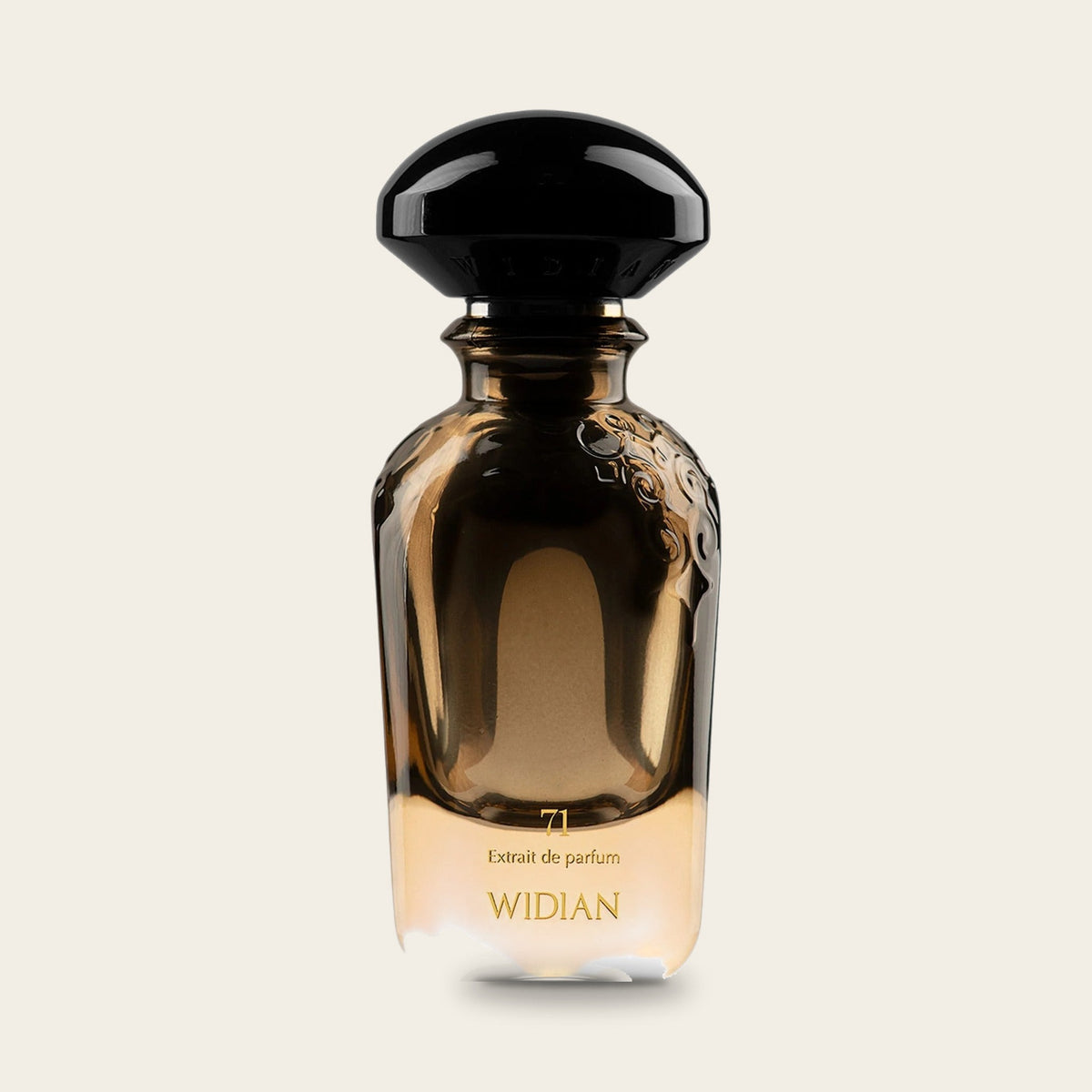
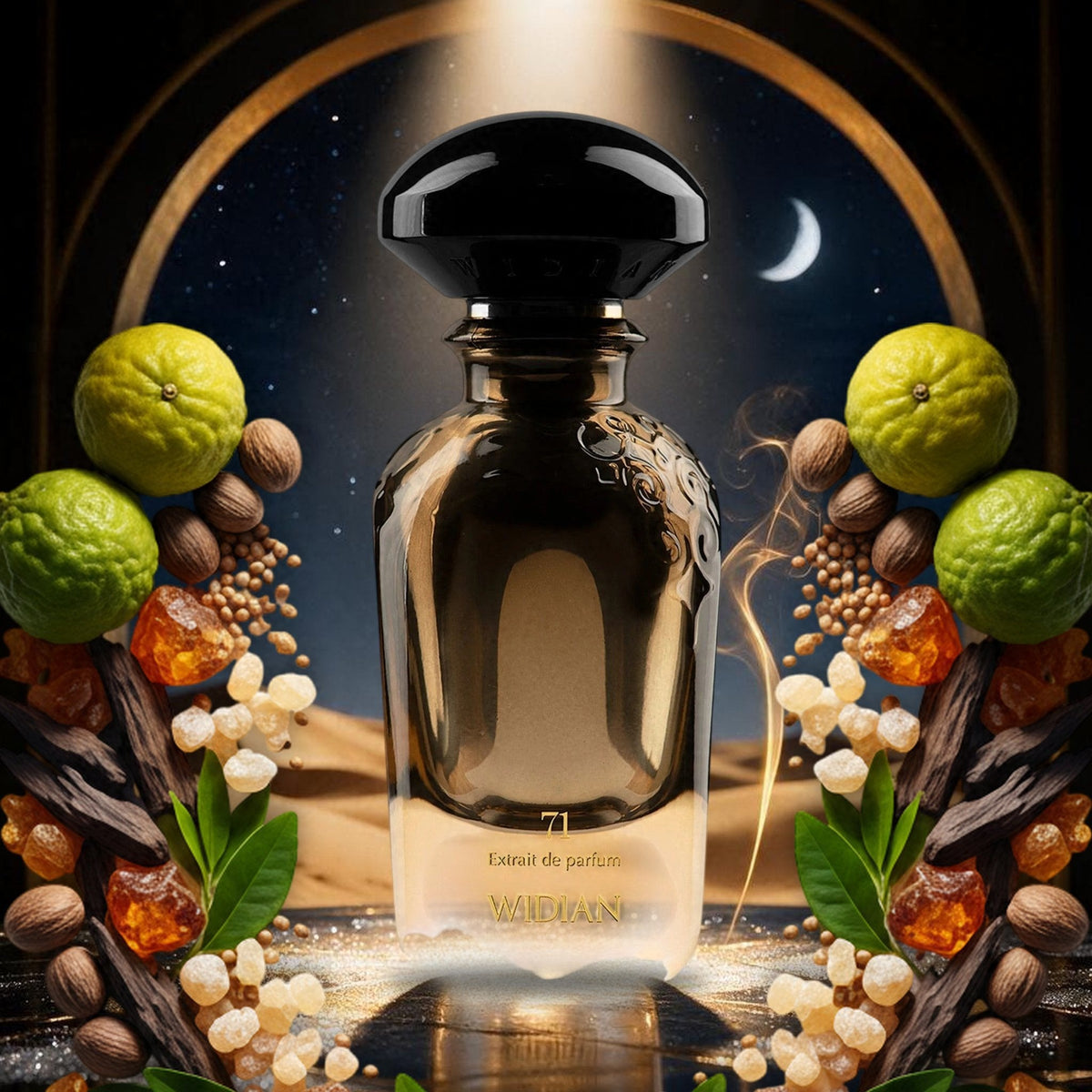
Fragrances with Nutmeg









Questions and answers
Warm, spicy and slightly sweet, with a woody-resinous, almost peppery sparkle.
Nutmeg is the seed of Myristica fragrans, an evergreen tree of the nutmeg family that usually grows to 5 to 15 metres. Originally it grew only on the Banda Islands, a group of tiny islands in the Moluccas in eastern Indonesia. Its yellow, pear-shaped fruit is 6 to 9 centimetres long and splits open when ripe; inside lies a brown seed wrapped in a bright red, net-like seed covering – mace. Nutmeg and mace therefore come from the same fruit and are traded separately as spices. Indonesia remains the largest producer, and nutmeg is also grown in Grenada, India and Sri Lanka, among other places.
Ripe fruits split open while still on the tree, and the seed and mace fall out and are gathered. The red seed covering is peeled off and dried on its own; the nuts dry for several weeks before their hard shell is cracked. For perfumery, the dried nuts are ground and steam-distilled – mostly broken, worm-eaten or otherwise unsaleable nuts end up in the still. The seeds contain around 5 to 15% essential oil.
Nutmeg brings a fresh, terpenic, warm-spicy sparkle above all to the top note, with a sweetish, warm-spicy body. Perfumers like to use the oil to enliven and modify spicy accords; it is often found in cologne-style, masculine and amber (oriental) compositions. In small amounts it also lends floral bouquets a surprising, warm spiciness. In our range it sits in the top of 41 out of 78 fragrances.
Spicy · Amber (oriental) · top note
Nutmeg trees bear fruit all year round; the main harvest falls in different months depending on the growing region. After harvest the nuts dry for several weeks before they are cracked, ground and distilled.
In our fragrances, it often appears alongside Patchouli, vanilla, cedarwood, bergamot, musk, sandalwood, amber.
Until the early 19th century, nutmeg grew practically only on the Banda Islands, which made nutmeg and mace among the most precious spices in the world. To secure the monopoly, the Dutch East India Company (VOC) conquered the archipelago in 1621 under Governor-General Jan Pieterszoon Coen; of around 15,000 Bandanese only a fraction survived, and from then on the VOC controlled the world’s entire production of nutmeg and mace. England still laid claim to the small island of Run until it gave this up in the Treaty of Breda in 1667, keeping Manhattan instead, which it had taken from the Dutch a few years earlier. During the Napoleonic Wars the British brought nutmeg trees to their own colonies such as Penang, Bencoolen and Singapore, and later to Grenada. There nutmeg became so important that it has featured on the national flag since 1974.
- In the Treaty of Breda in 1667, England gave up its claim to the nutmeg island of Run – and kept Manhattan in return.
- Since 1974 a nutmeg has adorned the flag of Grenada – the island nation is one of the world’s most important nutmeg producers.
- Only female nutmeg trees bear fruit – yet around half of all trees grown from seed are male.
Around 60 to 90% of the seeds’ essential oil consists of monoterpene hydrocarbons such as sabinene and α- and β-pinene; the key molecule is usually sabinene (C₁₀H₁₆, PubChem CID 18818, CAS 3387-41-5, molar mass about 136 g/mol), a bicyclic monoterpene with a woody-spicy, peppery scent. Its share varies widely with origin and method, from under 10% to over 50%. α-Pinene (C₁₀H₁₆, PubChem CID 6654, CAS 80-56-8) has the same molecular formula as sabinene but a different carbon skeleton. The oil also contains terpinen-4-ol and spicy phenylpropanoids such as myristicin (C₁₁H₁₂O₃, PubChem CID 4276, CAS 607-91-0, about 192 g/mol), which usually makes up only a few per cent of the oil. Myristicin is toxic in large amounts; effects, however, only occur at quantities far beyond a pinch of spice. Besides the essential oil, the seeds contain a solid fat, nutmeg butter, about three quarters of which is trimyristin.
FRAGRANCE KNOWLEDGE
In the 4D Journal
-
 FRAGRANCE KNOWLEDGE
Rose in perfume: The queen of fragrance materials
READ ARTICLE
-
 FRAGRANCE KNOWLEDGE
Vanilla in perfume: From orchid to favourite scent
READ ARTICLE
-
 FRAGRANCE KNOWLEDGE
Leather in perfume: How does something smell that was never in the bottle?
READ ARTICLE
-
 FRAGRANCE KNOWLEDGE
Scented candles & home fragrance: How to use them right
READ ARTICLE