

INGREDIENT GLOSSARY
Plum
Prunus domestica (model for the accord) · Rose family (Rosaceae)
Juicy-sweet and darkly fruity, with the creamy, slightly winey depth of ripe late-summer fruit.
ACCORDFRUITY · LACTONIC · TOP AND HEART NOTE
AT A GLANCE
- Plant: European plum Prunus domestica, a member of the rose family, model for the accord
- Origin: originally western Asia south of the Caucasus, today grown worldwide
- Extraction: no oil from the fruit – an accord of esters and lactones
- Scent: juicy-sweet, darkly fruity, creamy – top and heart note
PROFILE
- Origin
- Originally western Asia south of the Caucasus and the Caspian Sea · today grown in many countries of the temperate zone
- Extraction
- No essential oil from the fruit – in perfume an accord of fruity esters, lactones and other aroma materials
- Main molecules
- Hexyl acetate (C₈H₁₆O₂, sweet, fruity ester of the real fruit) · γ-decalactone (C₁₀H₁₈O₂, fruity, creamy lactone) · linalool (C₁₀H₁₈O, floral and fresh)
- Harvest
- As an accord made of aroma materials, the plum scent is available all year round regardless of the harvest; the trees flower white in spring.
- Often paired with
- Vanille, Patschuli, Moschus, Sandelholz, Tonkabohne, Rose, Zedernholz
Numbers that surprise
48 chromosomes
are carried by the European plum – three times as many as its ancestor, the cherry plum, with 16; it is hexaploid, with six sets of chromosomes.
2.5 to 3 kilograms
of fresh plums are needed for a single kilogram of prunes.
Rounded values; calculation based on published data.
Harvest and season
As an accord made of aroma materials, the plum scent is available all year round regardless of the harvest; the trees flower white in spring.
There is no essential oil from the flesh of the fruit, so perfumers recreate the plum scent as an accord. The model is the chemistry of the ripe fruit: in analyses, esters such as hexyl acetate form the largest group of volatile compounds, alongside alcohols, lactones such as δ- and γ-decalactone, and terpenes such as linalool. In the accord, esters provide the juicy freshness and lactones the creamy, ripe fullness; darker, winey facets come from further building blocks.
Knowledge to share
Myth or truth?
Statement 1
Plum fragrances are made with an oil distilled from the fruit.
Myth. There is no essential oil from the flesh of the fruit. The plum scent in perfume is an accord of fruity esters and creamy lactones – modelled on the aroma compounds of the real fruit.
Statement 2
The Japanese “ume” is a plum.
Myth. The ume (Prunus mume) is often called the Japanese plum, but it is more closely related to the apricot than to the plum. It originally comes from China.
Statement 3
Prune plums, mirabelles and greengages belong to the same species as the plum.
True. They are all forms of the European plum, Prunus domestica, and cross easily with one another. The German name “Zwetschge” recalls Damascus: it goes back to Late Latin “damascena” – “plums from Damascus”.
Your result
FRAGRANCES WITH PLUMINGREDIENT GLOSSARY
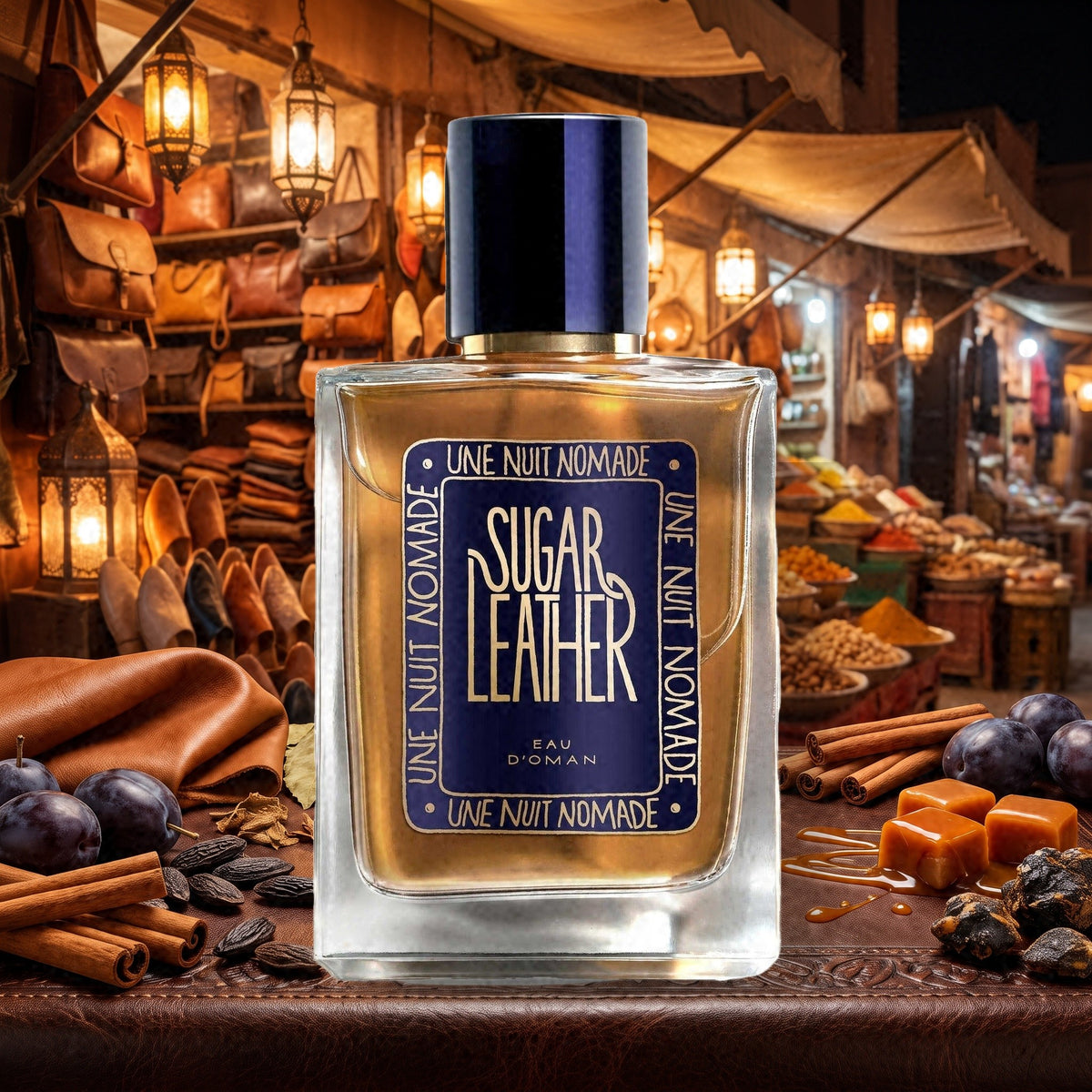
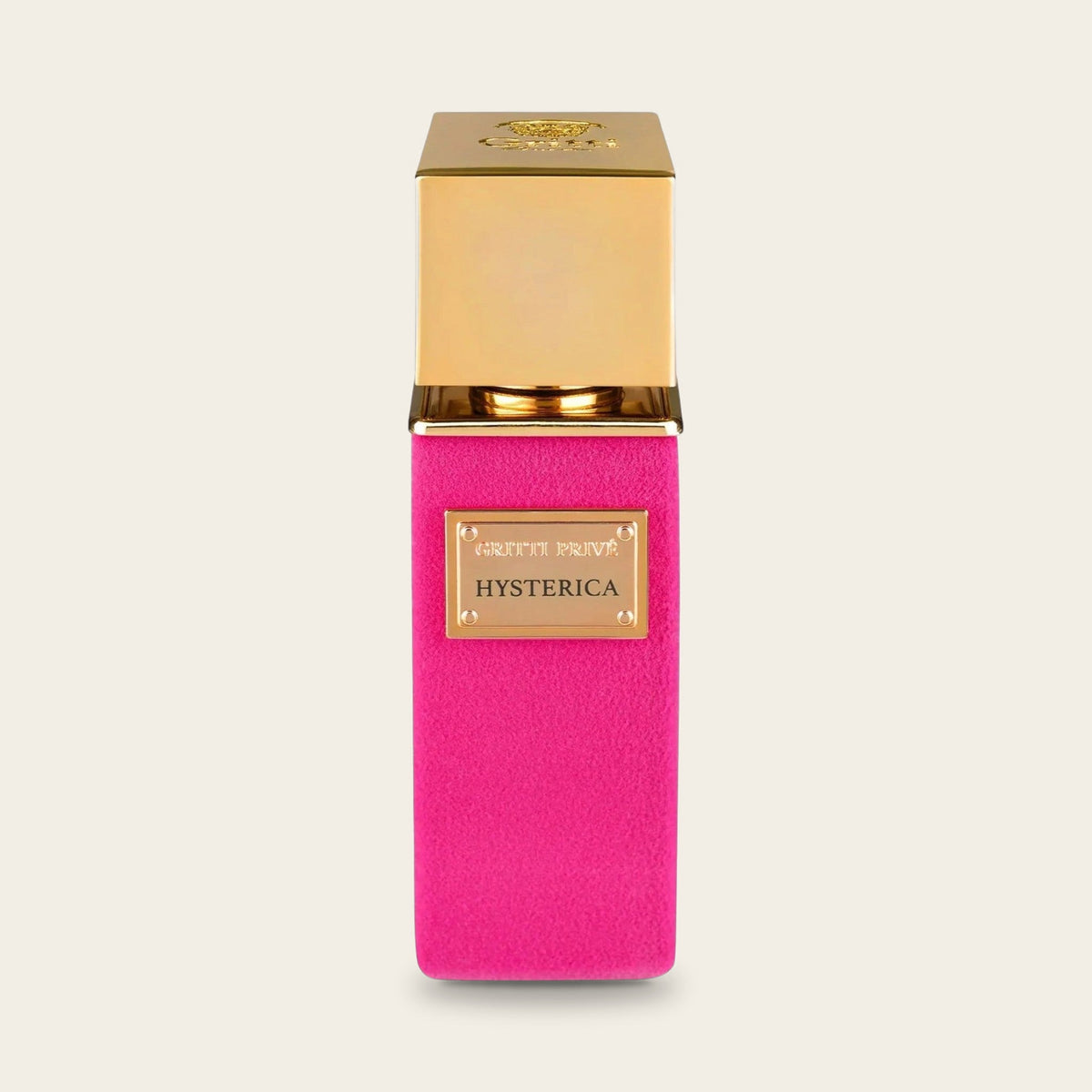
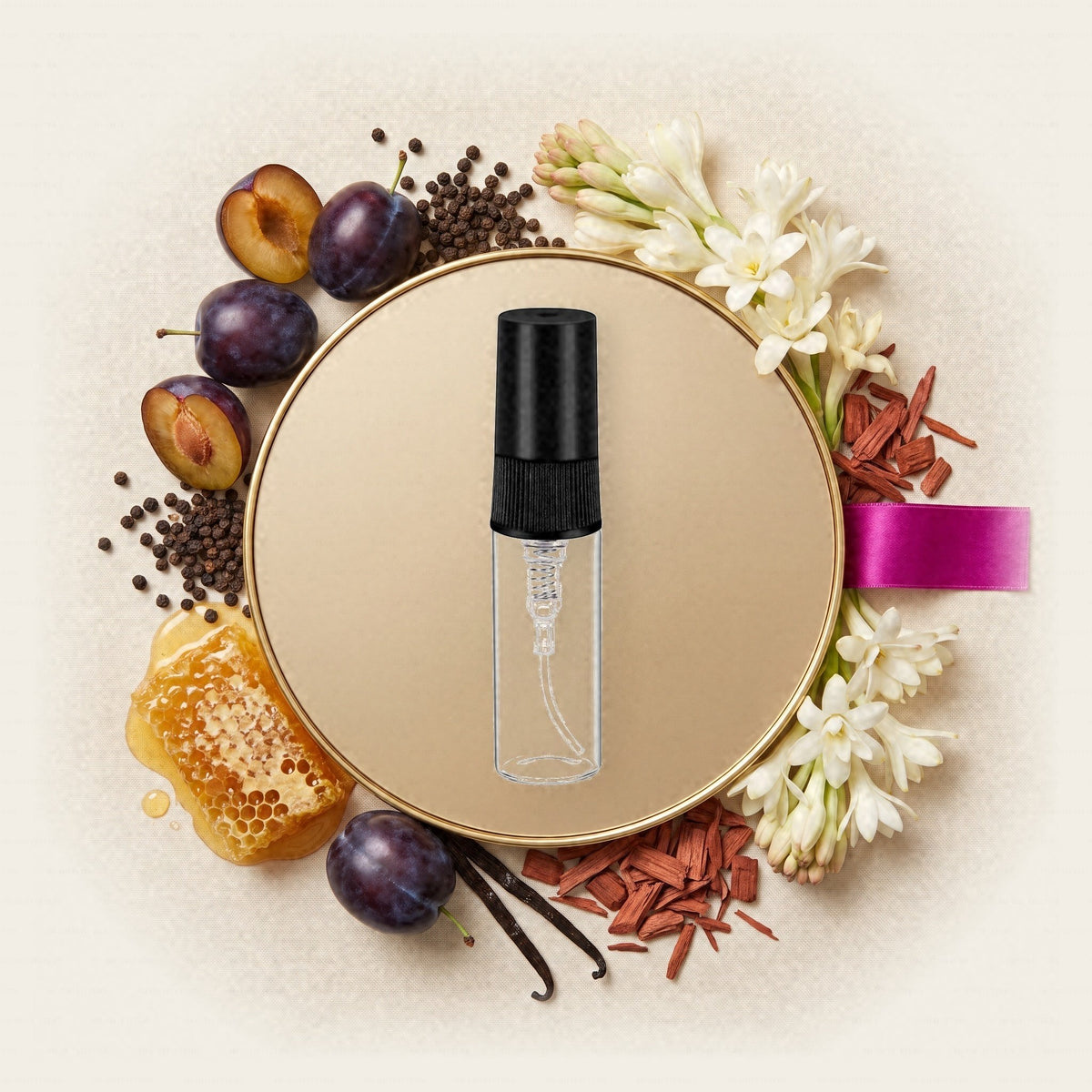
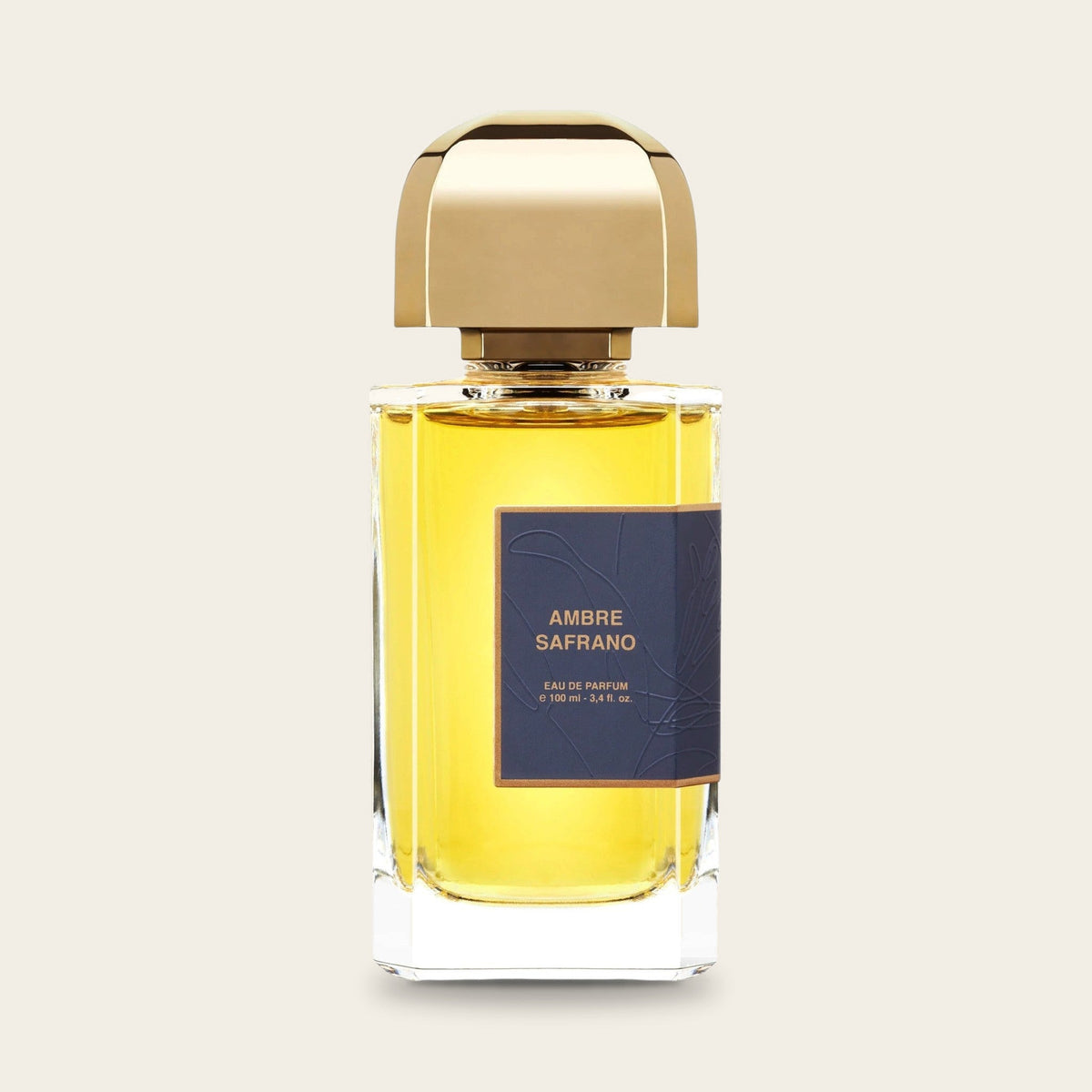
Fragrances with Plum



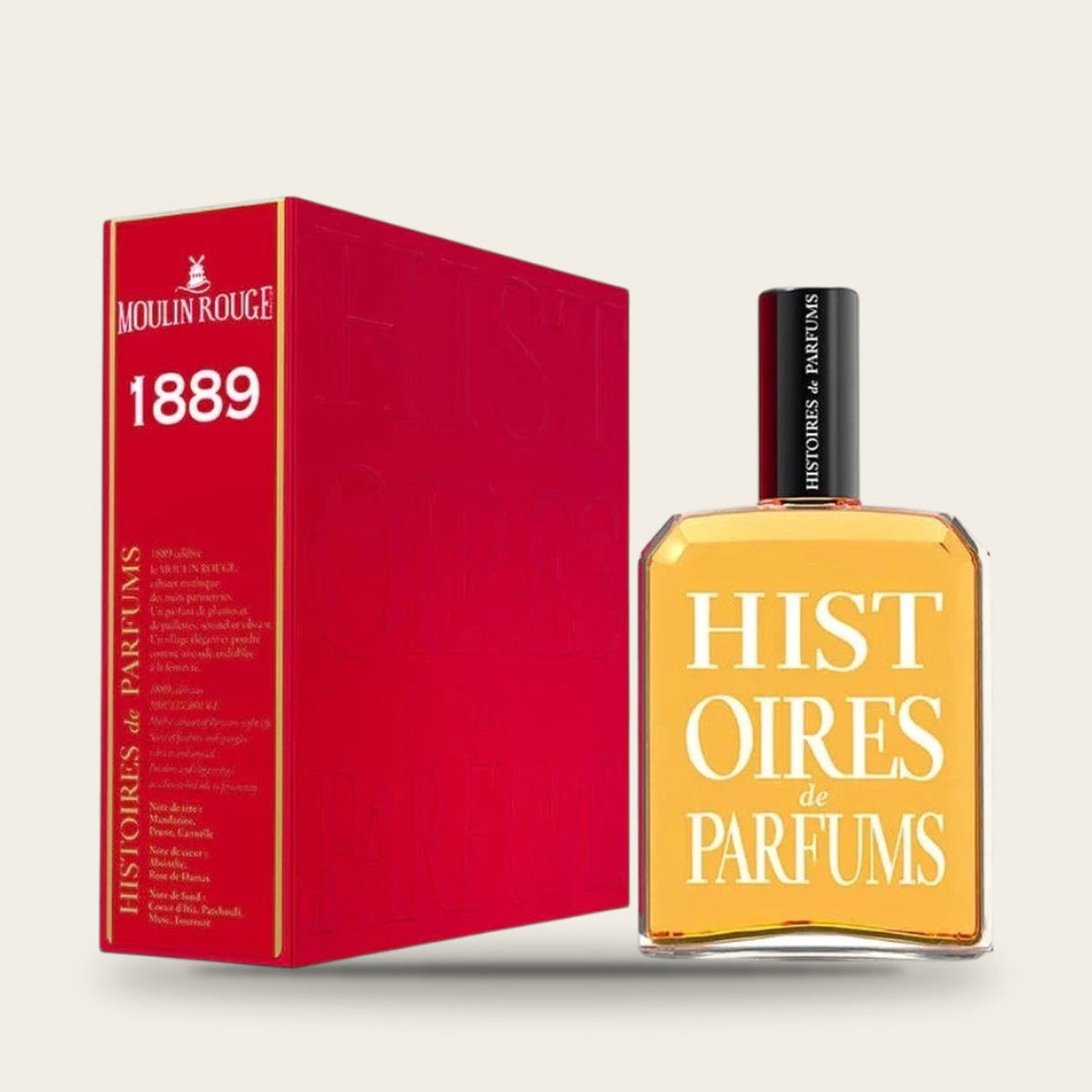

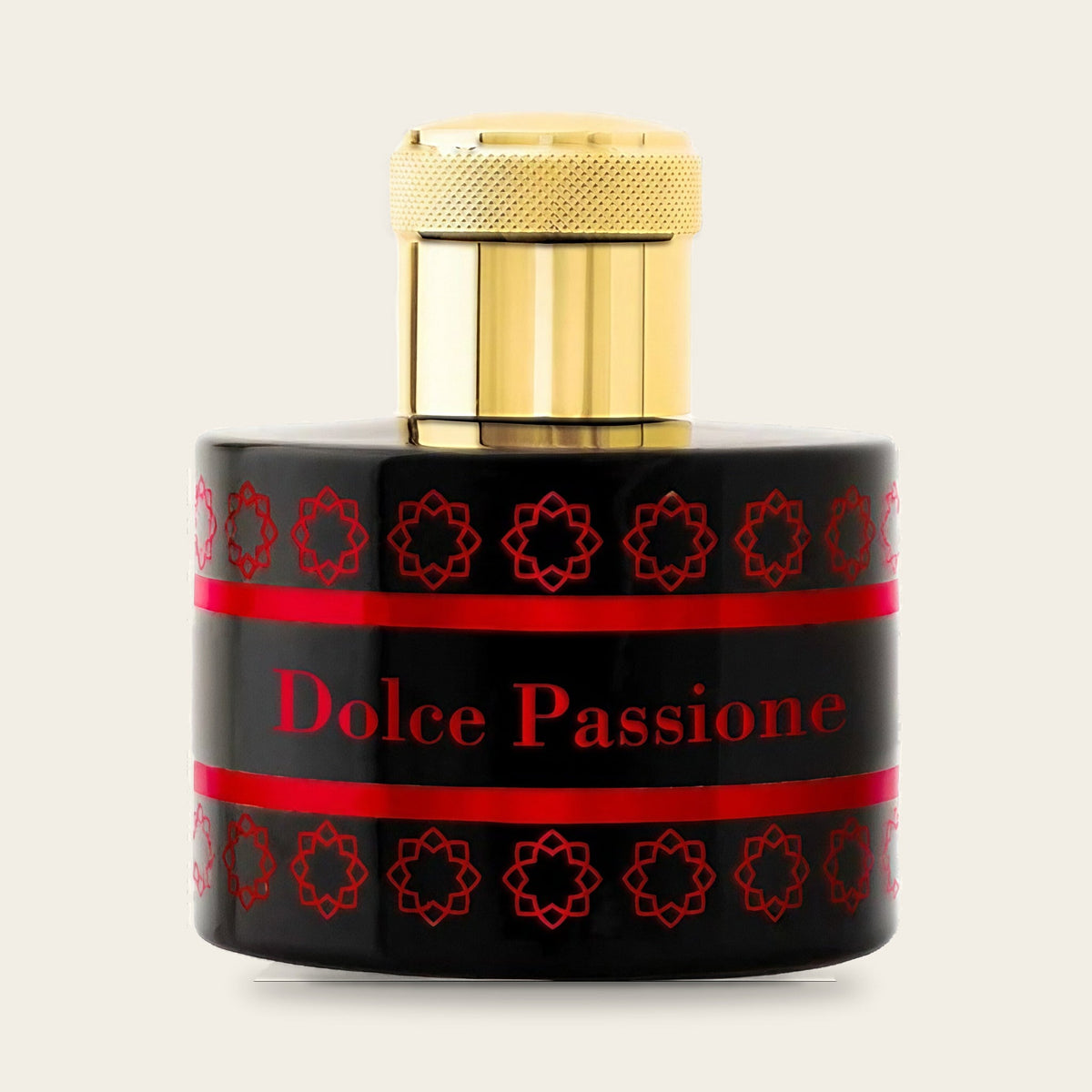
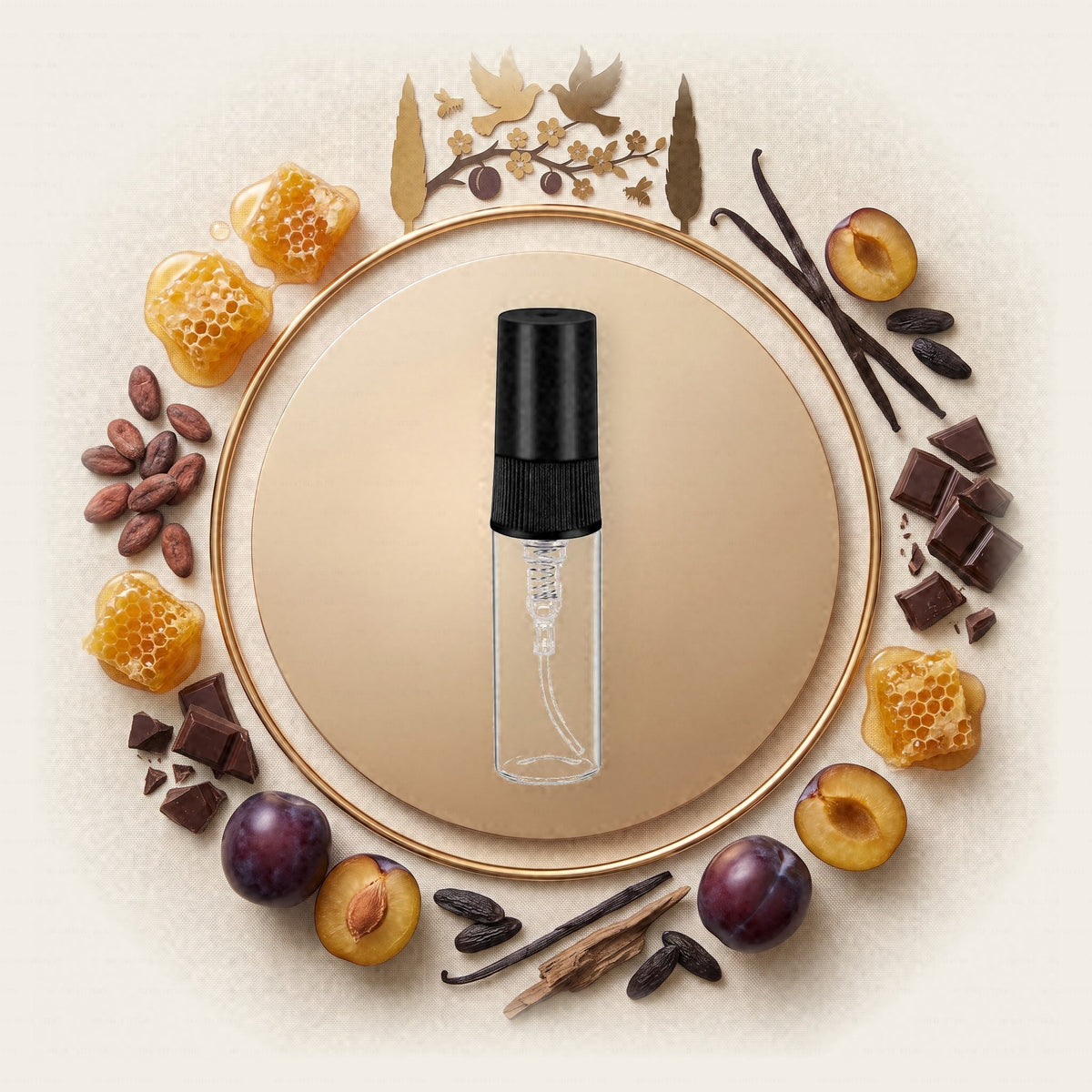


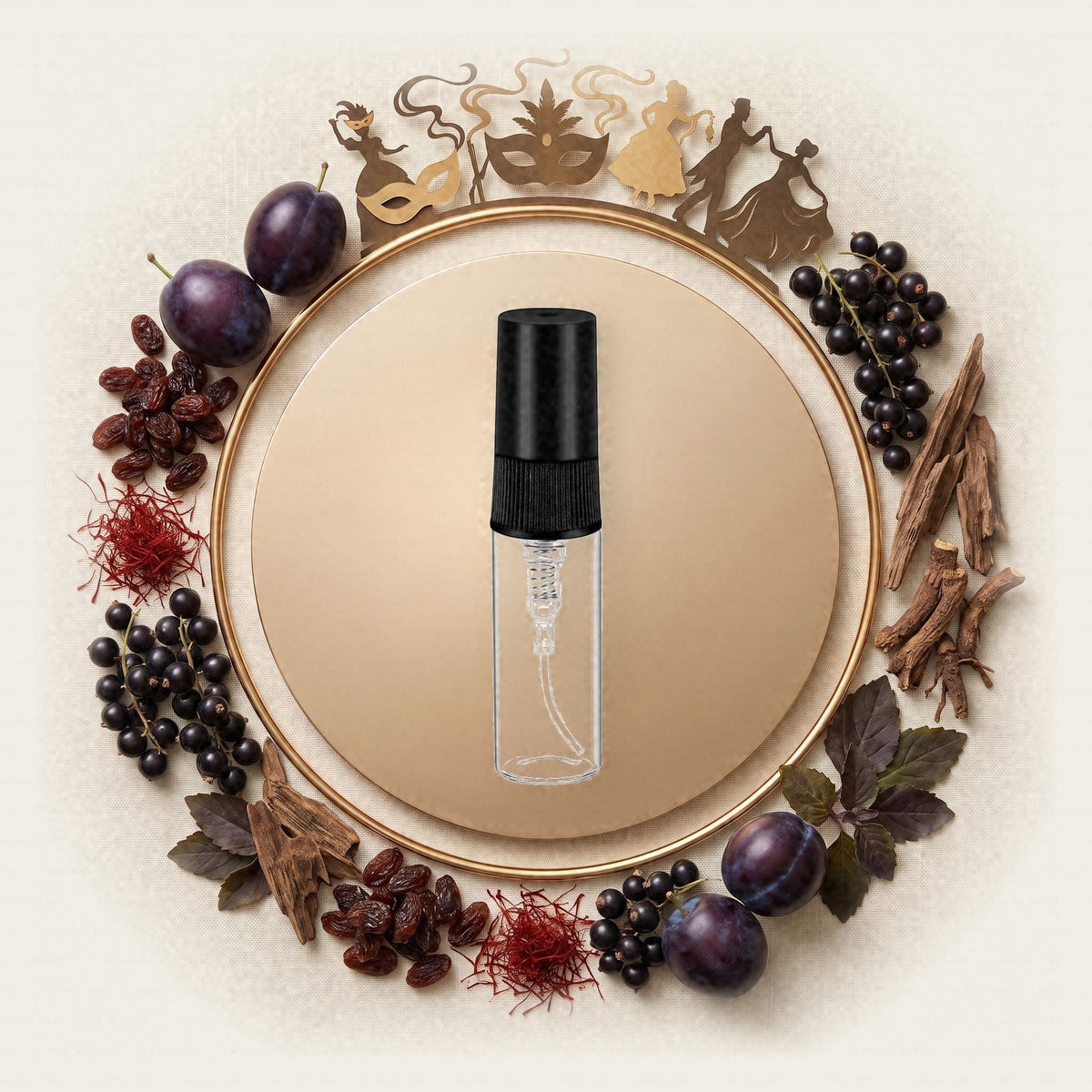


Questions and answers
Juicy-sweet and darkly fruity, with the creamy, slightly winey depth of ripe late-summer fruit.
The European plum, Prunus domestica, belongs to the rose family and is closely related to cherry, peach and apricot. It probably arose in western Asia, south of the Caucasus and the Caspian Sea; its parents are usually thought to be the cherry plum (Prunus cerasifera) and the sloe (Prunus spinosa), although genetic studies give contradictory results. Prune plums, greengages, mirabelles and bullaces all belong to the same species and cross easily with one another. Today the plum is grown in many countries of the temperate zone.
There is no essential oil from the flesh of the fruit, so perfumers recreate the plum scent as an accord. The model is the chemistry of the ripe fruit: in analyses, esters such as hexyl acetate form the largest group of volatile compounds, alongside alcohols, lactones such as δ- and γ-decalactone, and terpenes such as linalool. In the accord, esters provide the juicy freshness and lactones the creamy, ripe fullness; darker, winey facets come from further building blocks.
A plum accord gives compositions a dark, juicy-sweet fruitiness with creamy depth. It usually sets in as early as the opening and carries the fruitiness into the heart, where it pairs well with rose, spices and woods. In our range, plum appears in 38 fragrances, 26 in the top, 12 in the heart and one in the base note.
Fruity · Lactonic · Top and heart note
As an accord made of aroma materials, the plum scent is available all year round regardless of the harvest; the trees flower white in spring.
In our fragrances, it often appears alongside Vanille, Patschuli, Moschus, Sandelholz, Tonkabohne, Rose, Zedernholz.
The plum has accompanied humans for millennia: plum stones show it has been used for at least around 6,000 years, with finds from Neolithic settlement sites. In Roman times it was widespread; along the Limes in Germania archaeologists have found numerous stones of plum, peach and sloe. Plum stones were also recovered from the Viking settlement of Hedeby. The German name “Zwetschge” recalls Damascus, which was already regarded in antiquity as the fruit's home. From the 19th century, French varieties from the Agen region turned California into a centre of prune production.
- The German word “Zwetschge” goes back to Late Latin “damascena” – “plums from Damascus”.
- The Japanese “ume”, often called the Japanese plum, is more closely related to the apricot than to the plum.
- Even at the Viking settlement of Hedeby on the Schlei, archaeologists found plum stones.
The aroma of the real plum is a mixture of many faint voices. In analyses, esters make up the largest share of the volatile compounds; especially odour-active are esters such as ethyl 2-methylbutanoate and hexyl acetate (C₈H₁₆O₂), alongside lactones such as δ- and γ-decalactone (C₁₀H₁₈O₂) and linalool (C₁₀H₁₈O). Lactones are ring-shaped esters and typically smell creamy and fruity. Genetically, the European plum is a special case: it is hexaploid and carries 48 chromosomes, while the cherry plum has only 16.
FRAGRANCE KNOWLEDGE
In the 4D Journal
-
 FRAGRANCE KNOWLEDGE
Rose in perfume: The queen of fragrance materials
READ ARTICLE
-
 FRAGRANCE KNOWLEDGE
Vanilla in perfume: From orchid to favourite scent
READ ARTICLE
-
 FRAGRANCE KNOWLEDGE
Leather in perfume: How does something smell that was never in the bottle?
READ ARTICLE
-
 FRAGRANCE KNOWLEDGE
Scented candles & home fragrance: How to use them right
READ ARTICLE