
INGREDIENT GLOSSARY
Aldehydes
Sparkling and slightly metallic, with waxy, soapy cleanliness, citrus peel and a freshly laundered impression.
SYNTHETICALDEHYDIC · FRESH AND SOAPY · MAINLY TOP NOTE
AT A GLANCE
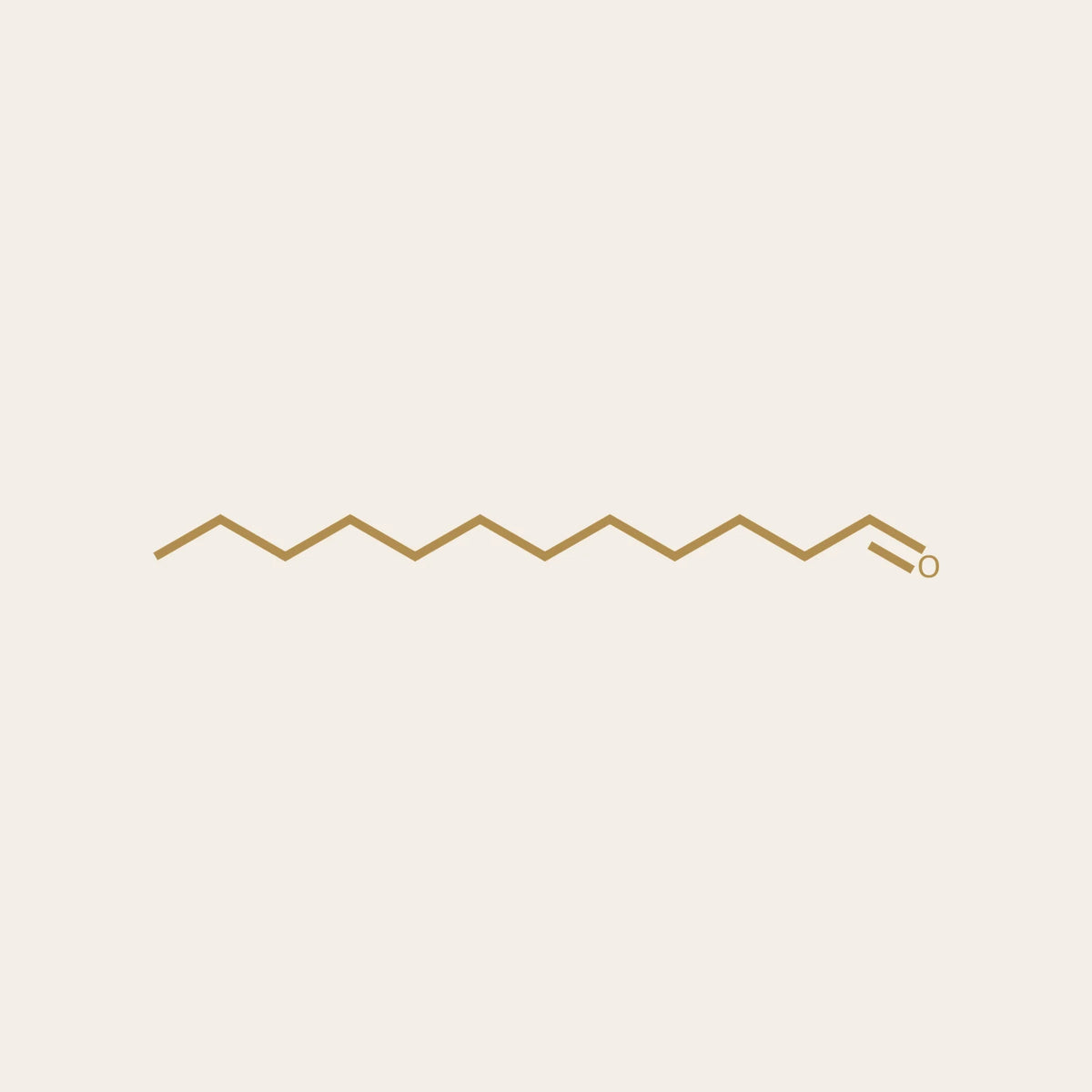
- Compound class: aliphatic aldehydes with eight to twelve carbon atoms, recognisable by the CHO group
- Origin: produced industrially, nature-identical; naturally present in citrus peel oils and coriander
- Extraction: synthesis via hydroformylation, dehydrogenation of fatty alcohols or the Darzens reaction
- Scent: sparkling, waxy-soapy, citrus-peel, slightly metallic – mainly a top note
PROFILE
- Origin
- Industrially produced aroma chemicals, chemically identical to their natural models · In nature found in small amounts in citrus peel oils (orange, mandarin, lime, lemon) and in coriander
- Extraction
- Synthesis from petrochemical and oleochemical building blocks: hydroformylation of alkenes, dehydrogenation or oxidation of the corresponding fatty alcohols, and for 2-methylundecanal also the Darzens reaction
- Main molecules
- Octanal (C₈H₁₆O, “aldehyde C-8”, fruity and citrusy) · decanal (C₁₀H₂₀O, “aldehyde C-10”, orange-peel and waxy) · undecanal (C₁₁H₂₂O, “aldehyde C-11”, soapy and waxy, reminiscent of fresh laundry) · dodecanal/lauric aldehyde (C₁₂H₂₄O, “aldehyde C-12”, waxy and soapy with a citrus nuance) · 2-methylundecanal (C₁₂H₂₄O, herbaceous and amber-like, slightly metallic)
- Harvest
- As synthetic aroma chemicals, aldehydes are available all year round, independent of harvest and season.
- Often paired with
- Moschus, Rose, Vanille, Bergamotte, Patschuli, Amber, Jasmin
Numbers that surprise
11 instead of 14
carbon atoms make up the peach-scented “aldehyde C-14” – and it is not even an aldehyde, but a lactone.
around 1 to 2%
is the share of all aldehydes combined in cold-pressed mandarin and orange peel oil – and yet octanal and decanal are among the molecules that shape the scent of the peel.
2 hydrogen atoms
fewer than the corresponding alcohol: that is exactly what the name “aldehyde” says, a contraction of “alcohol dehydrogenatus” – decanol (C₁₀H₂₂O) becomes decanal (C₁₀H₂₀O).
Rounded values; calculation based on published data.
Harvest and season
As synthetic aroma chemicals, aldehydes are available all year round, independent of harvest and season.
Aliphatic aldehydes are produced industrially and are chemically identical to the molecules in citrus peel. One important route is hydroformylation: an alkene is extended by a CHO group using carbon monoxide and hydrogen, for example decene to undecanal or heptene to octanal. A second route starts from the fatty alcohol of the same chain length, from which two hydrogen atoms are removed – this is how dodecanal is made from dodecanol over copper or silver catalysts. The branched 2-methylundecanal can be made from methyl nonyl ketone by the Darzens reaction described in 1904.
Knowledge to share
Myth or truth?
Statement 1
Aldehydes are purely artificial – they do not occur in nature.
Myth. Perfumery aldehydes are indeed made synthetically, but they are nature-identical: octanal, decanal, undecanal and dodecanal occur in citrus peel oils such as orange, mandarin, lemon and lime, and coriander is among the plants with the highest contents.
Statement 2
Aldehydes always smell pungent.
Myth. That applies mainly to short, volatile aldehydes. As the chain grows longer, the odour becomes softer: the aldehydes with eight to twelve carbon atoms used in perfumery smell pleasantly fatty-floral, citrusy and waxy – octanal fruity, for example, and dodecanal waxy and soapy.
Statement 3
The fact that coriander leaves taste of soap to some people has to do with aldehydes.
True. The key aroma compounds of coriander leaves are aldehydes such as decanal, (E)-2-decenal and (E)-2-dodecenal. A 2012 study found a genetic variant near the olfactory receptor OR6A2, which responds to aldehydes – it is linked to whether someone perceives coriander as soapy.
Your result
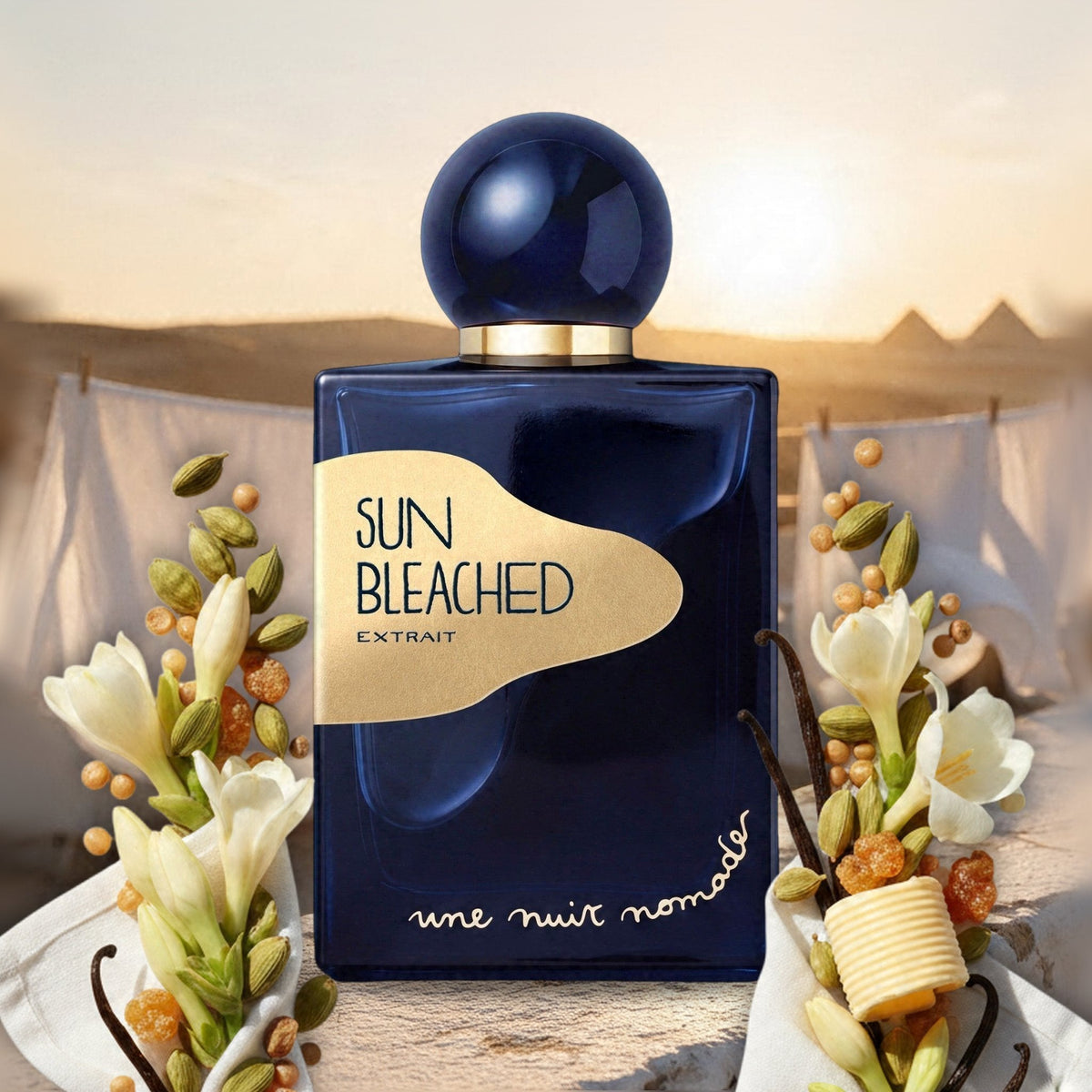
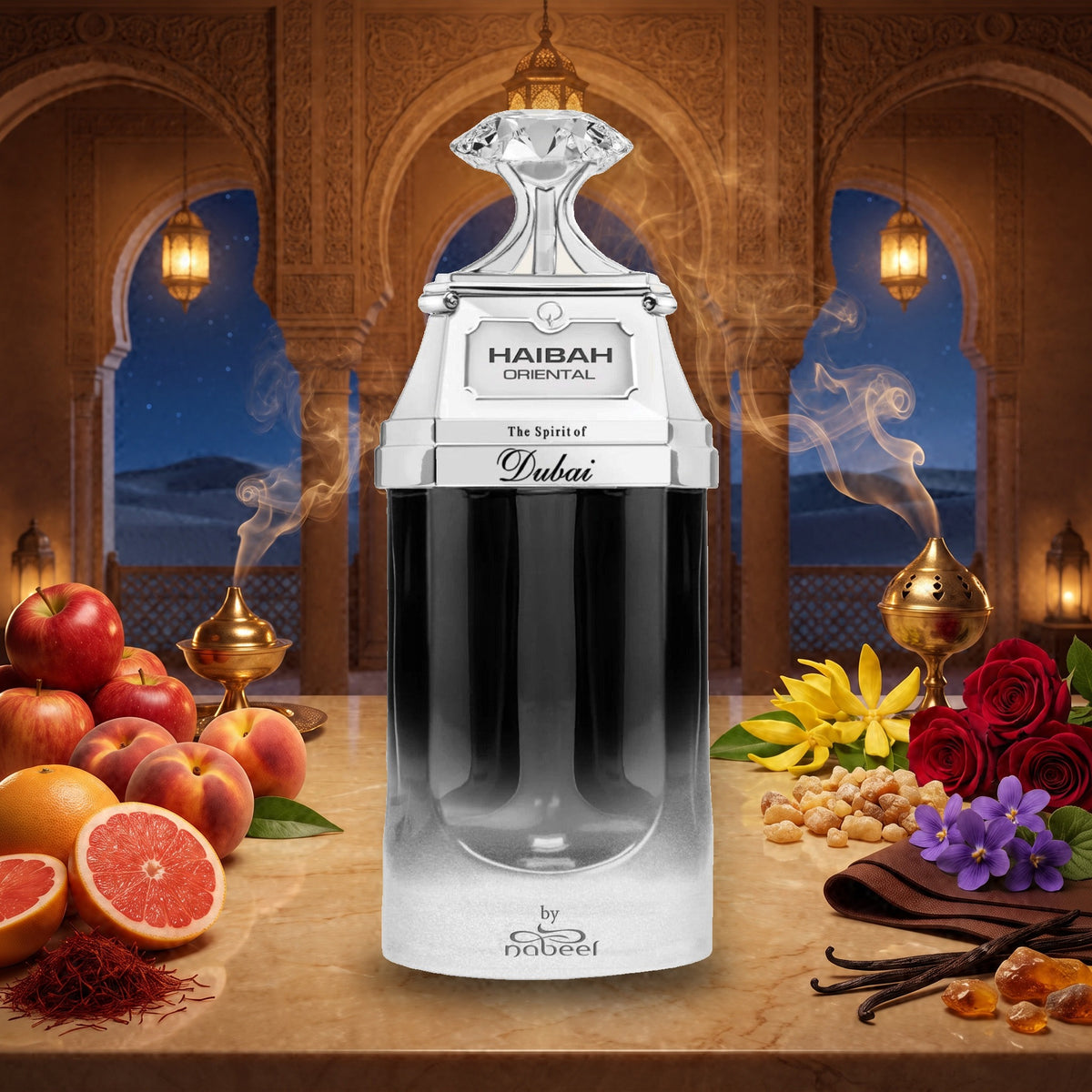
FRAGRANCES WITH ALDEHYDESINGREDIENT GLOSSARY
Fragrances with Aldehydes


Questions and answers
Sparkling and slightly metallic, with waxy, soapy cleanliness, citrus peel and a freshly laundered impression.
In perfumery, “aldehydes” does not refer to a plant but to a group of molecules. It mainly means the straight-chain, saturated aldehydes with eight to twelve carbon atoms – octanal, decanal, undecanal and dodecanal – plus the branched 2-methylundecanal. Nature knows them well. Octanal and decanal are among the main aldehydes in orange and mandarin peel oil, dodecanal occurs in orange, lemon and lime, and coriander is one of the plants with the highest contents of decanal, undecanal and dodecanal. Perfumery aldehydes, however, come from synthesis.
Aliphatic aldehydes are produced industrially and are chemically identical to the molecules in citrus peel. One important route is hydroformylation: an alkene is extended by a CHO group using carbon monoxide and hydrogen, for example decene to undecanal or heptene to octanal. A second route starts from the fatty alcohol of the same chain length, from which two hydrogen atoms are removed – this is how dodecanal is made from dodecanol over copper or silver catalysts. The branched 2-methylundecanal can be made from methyl nonyl ketone by the Darzens reaction described in 1904.
Aliphatic aldehydes give a composition radiance and diffusion: in small amounts they make floral and citrus accords seem brighter, fresher and more “airy” and carry them outward in the opening. Their soapy, clean effect is typical, which is why they are also widely used in soaps and detergents; 2-methylundecanal is also used for conifer and fir notes. Because aldehydes react easily with air and are very powerful odorants, they are dosed sparingly and usually diluted. In our range, aldehydes appear in 27 fragrances, 25 in the top and 2 in the heart note.
Aldehydic · Fresh and soapy · Mainly top note
As synthetic aroma chemicals, aldehydes are available all year round, independent of harvest and season.
In our fragrances, it often appears alongside Moschus, Rose, Vanille, Bergamotte, Patschuli, Amber, Jasmin.
The name “aldehyde” was coined by the chemist Justus von Liebig in the 1830s as a contraction of “alcohol dehydrogenatus” – alcohol from which hydrogen has been removed. Modern perfumery began in the late 19th century with the synthesis of aroma chemicals. In 1904 the French chemist Georges Darzens published a general method for synthesising aldehydes; it was also used to make 2-methylundecanal for the first time. At the beginning of the 20th century aliphatic aldehydes found their way into floral compositions.
- The peach-scented “aldehyde C-14” is chemically not an aldehyde at all but an eleven-carbon lactone.
- If coriander leaves taste soapy to you, aldehydes are probably the reason: in 2012 a study with more than 14,000 participants found a genetic variant near an olfactory receptor that responds to aldehydes.
- “Aldehyde C-12” is ambiguous: dodecanal and 2-methylundecanal share the formula C₁₂H₂₄O but smell different – one waxy and soapy, the other herbaceous and amber-like.
Aldehydes carry a formyl group, –CHO, at the end of the chain: a carbon atom double-bonded to oxygen and bearing one hydrogen atom. The aliphatic aldehydes of perfumery form a homologous series whose members each differ by one CH₂ unit: octanal (C₈H₁₆O, PubChem CID 454), decanal (C₁₀H₂₀O, CID 8175), undecanal (C₁₁H₂₂O, CID 8186) and dodecanal (C₁₂H₂₄O, CID 8194). 2-Methylundecanal (C₁₂H₂₄O, CID 61031) is a branched isomer of dodecanal with one asymmetric carbon atom. The odour changes with chain length: short aldehydes smell pungent, from eight to twelve carbon atoms the impression becomes pleasantly fatty and floral, octanal comes across as fruity, and dodecanal is regarded as the model of the fatty-aldehydic odour. The formyl group is reactive: aldehydes oxidise easily in air. For more stable formulations they are therefore sometimes converted into acetals or nitriles.
FRAGRANCE KNOWLEDGE
In the 4D Journal
-
 FRAGRANCE KNOWLEDGE
Rose in perfume: The queen of fragrance materials
READ ARTICLE
-
 FRAGRANCE KNOWLEDGE
Vanilla in perfume: From orchid to favourite scent
READ ARTICLE
-
 FRAGRANCE KNOWLEDGE
Leather in perfume: How does something smell that was never in the bottle?
READ ARTICLE
-
 FRAGRANCE KNOWLEDGE
Scented candles & home fragrance: How to use them right
READ ARTICLE