
Neroli or Orange Blossom? One Tree, Many Scents
A single tree, five different scents, and a 17th-century princess who is said to have perfumed her gloves with it. Neroli and orange blossom are among the most beautiful raw materials in perfumery: bright, green, honey-sweet and, depending on how they are processed, quite different. What exactly is neroli, how does it differ from orange blossom, how is it obtained and in which fragrances can you smell it?
- What: Neroli is the essential oil from the blossoms of the bitter orange, obtained by steam distillation.
- The difference: Orange blossom absolute comes from the same blossoms but is extracted with solvents and smells sweeter, more honeyed and warmer. Neroli is fresher and greener.
- One tree, many materials: Leaves and twigs give petitgrain, the peel gives bitter orange oil, and the distillation water is the well-known orange flower water.
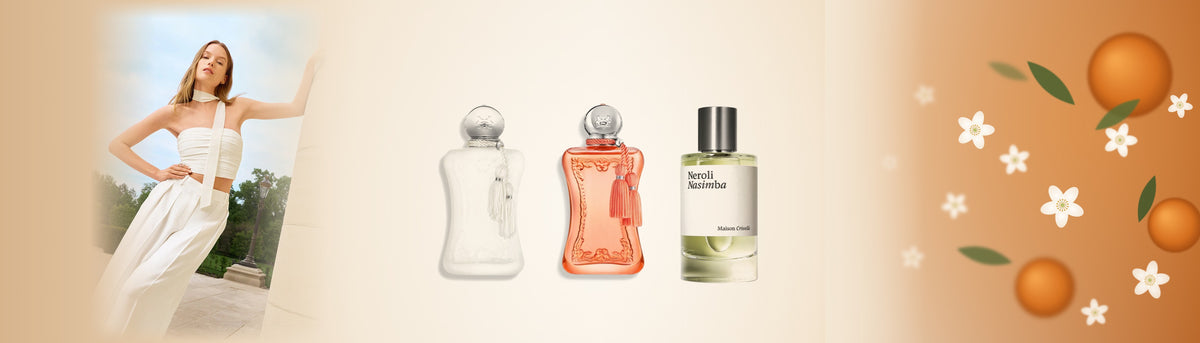
- To smell: Athénaïs and Valaya by Parfums de Marly, Neroli Nasimba by Maison Crivelli or Holy Neroli by Montale.
What is neroli?
Neroli is an essential oil from the white blossoms of the bitter orange tree, botanically Citrus × aurantium, in French bigaradier. This is not the orange from your breakfast table but its tart relative, whose fruit the British use for their bitter orange marmalade. The blossoms are picked by hand and steam-distilled the very same day. The steam releases the scent molecules from the delicate petals, and as it cools, oil and water separate.
What does the result smell like? Bright, green and honeyed at the same time, with a slightly bitter, almost metallic edge. Some think of freshly washed laundry, others of a walk through an orange grove in spring. Neroli feels airy and radiant but fades comparatively quickly, which is why in many perfumes it sits in the opening or the heart.
Neroli or orange blossom: what is the difference?
Here comes the big aha: neroli and orange blossom come from exactly the same blossoms. The difference lies solely in the process. And the bitter orange tree delivers even more. According to the fragrance manufacturer dsm-firmenich, the same tree yields neroli, orange blossom absolute and petitgrain, plus the oil from the fruit peel.
| Material | Part of the tree | Process | Scent |
|---|---|---|---|
| Neroli | Blossoms | Steam distillation | Fresh, green, honeyed, slightly bitter |
| Orange blossom absolute | Blossoms | Solvent extraction, first concrete, then absolute | Sweeter, warmer, honeyed, slightly animalic |
| Orange flower water | Blossoms | By-product of neroli distillation | Soft, sweet, floral, familiar from pastry |
| Petitgrain | Leaves and twigs | Steam distillation | Green, woody, tart, barely floral |
| Bitter orange oil | Fruit peel | Cold pressing | Zesty, citrusy, bitter-juicy |
The name petitgrain, “small grain”, recalls that the oil used to be distilled from small, unripe fruits. Today the leaves are used. And anyone smelling orange blossom absolute discovers a side that neroli lacks: traces of indole, a molecule that smells unpleasant in high concentration but floral and sensual in tiny amounts. That is where the warm, almost skin-close note of the absolute comes from.
Where does the name neroli come from?
From a princess. Marie-Anne de La Trémoille, born in Paris in 1642, married Flavio Orsini, Duke of Bracciano, in 1675 and thereby also became Princess of Nerola, a town in Lazio north of Rome. Towards the end of the 17th century she is said to have perfumed her gloves and bathwater with the essence of bitter orange blossom and so made the scent fashionable. Whether everything happened exactly like this can no longer be proven. The name, in any case, stuck to the blossom.
The fragrance molecule nerol, which smells of fresh rose, also owes its name to neroli: it was first isolated from neroli oil.
Where is neroli produced?
The most important producers today are Tunisia, Morocco and Egypt. In Tunisia, the heart of orange blossom beats on Cap Bon around Nabeul. According to the Tunisian newspaper La Presse, more than 80 percent of Tunisia's bitter orange growing area is located there. Depending on the weather, the harvest begins as early as March; picking is done by hand, mostly by women. In many families, orange flower water is still distilled at home today, in copper stills with clay tops, and the know-how is passed down from mother to daughter.
According to dsm-firmenich, the farms in Tunisia are small, mostly between half a hectare and two hectares, and the blossoms are processed on the day of harvest. One kilogram of orange blossom absolute requires around 850 kilograms of blossoms, roughly 1.3 million individual flowers. No wonder neroli ranks among the most precious flower oils of all. For families and pickers the short season is an important income, which is exactly why fair pay and long-term partnerships matter.
France has a neroli story too. In Vallauris on the Côte d'Azur, flower growers founded a cooperative at the end of the 19th century so as no longer to depend on the perfume manufacturers, and from 1904 they distilled their own flowers in the so-called Nérolium. In 1912, according to the Côte d'Azur tourist board, they harvested 2,467 tonnes of blossoms; today it is only around 15 tonnes. The entire harvest goes to Chanel.
Which molecules create the scent of orange blossom?
A natural oil is always an orchestra of hundreds of substances, but a few soloists shape the sound. In neroli these are above all linalool, fresh and floral-woody, and linalyl acetate, which is fruity and reminiscent of bergamot. Then there is nerol with its rose note, and methyl anthranilate. The latter is a little star: it smells of grape, is also found in Concord grapes and jasmine, and gives grape sweets their typical flavour.
Linalool
The main component of neroli, bright and floral-woody. It creates the airy radiance.
Methyl anthranilate
Smells of grape and gives orange blossom its sweet, juicy side. The absolute contains more of it.
Indole
Present in traces in the absolute. Unpleasant on its own, warm, floral and skin-close in tiny amounts.
Because real orange blossom is expensive, chemists stepped in early. In 1908 Aurantiol was created, a compound of hydroxycitronellal and methyl anthranilate that smells of orange blossom. According to Wikipedia it was first used in 1912 in Guerlain's L'Heure Bleue and is still the most widely used substance of its kind. Modern perfumes often combine natural neroli with such building blocks so that the scent lasts longer and stays consistent.
Curiosities about neroli and orange blossom
Something to share at your next dinner
- Eau de Cologne is neroli
When Johann Maria Farina launched his Eau de Cologne in Cologne in 1709, neroli was among the ingredients, alongside lemon, bergamot and orange.
- A queen in an orange blossom wreath
Queen Victoria wore a wreath of real orange blossom at her wedding in 1840. Albert later gave her a headdress with four green enamelled oranges, one for each of their four eldest children.
- Duck with bitter orange
The famous duck à l'orange was originally called “canard à la bigarade” and was prepared with bitter oranges.
- A tree for centuries
According to Wikipedia, bitter orange trees can live for up to 600 years.
- The grape in the blossom
Methyl anthranilate, one of the scent molecules of orange blossom, is also used as a bird repellent. Birds dislike the grape smell, people all the more love it.
- Peel in the liqueur
The oil from bitter orange peel flavours liqueurs such as Curaçao. So the same tree perfumes both the bottle on your dressing table and your cocktail glass.
How do I recognise neroli in a perfume?
With a little practice it works surprisingly well. A small training plan for your nose:
- Neroli: bright, green and citrusy in the first minutes, with a slightly soapy freshness and a hint of honey. Like light in a bottle.
- Orange blossom absolute: sweeter and denser from the first breath, with honey, wax and a grape-like note. Grows warmer over the hours.
- Petitgrain: not really a flower, more like crushed leaves: green, woody, tart. Typical of classic colognes.
- Our tip: spray a fragrance onto a test strip and smell it again after ten minutes and after two hours. Neroli fades, the absolute becomes creamier, petitgrain stays green.
Which fragrances contain orange blossom?
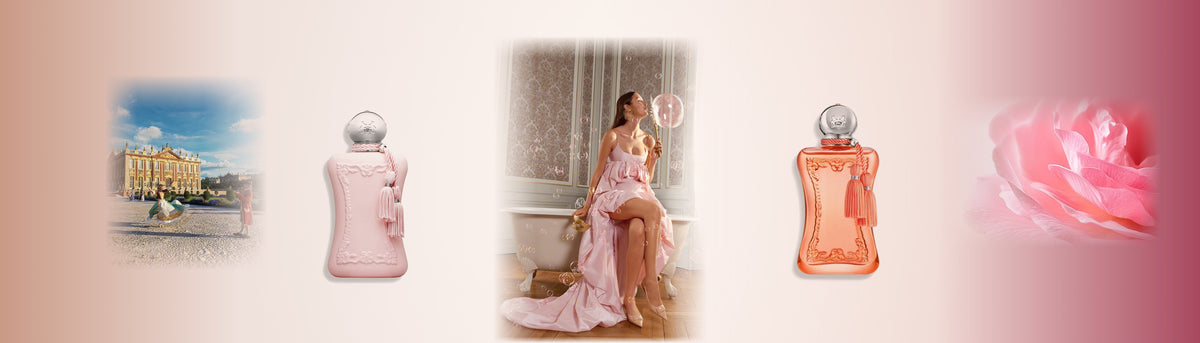
At Parfums de Marly, orange blossom is one of the secret leading ladies. According to the brand, Athénaïs opens with neroli, bergamot and yuzu and carries orange blossom and jasmine in its heart. Valaya and Valaya Exclusif lay orange blossom and white flowers over white musk, Oriana pairs it with marshmallow and praline, and Safanad also lists orange blossom in its pyramid. How the house's florals differ, you can read in The best floral fragrances by Parfums de Marly, and the story of the house in our portrait of Parfums de Marly.
If you like neroli pure and full of contrast, try Neroli Nasimba by Maison Crivelli, where radiant neroli meets a leather accord. Our portrait Maison Crivelli: perfume as a shock to the senses tells you more about the house. Holy Neroli by Montale combines orange blossom and neroli with patchouli, and Orangers en Fleurs by Houbigant celebrates the orange tree in bloom, fitting for a house with a long history, which we tell in The history of Houbigant.


- Plant: bitter orange, Citrus × aurantium, a cross between pomelo and mandarin.
- Process: neroli by steam distillation, absolute by solvent extraction.
- Yield: around 850 kilograms of blossoms for one kilogram of absolute (dsm-firmenich).
- Main molecule: linalool, plus linalyl acetate, nerol and methyl anthranilate.
- Synthetic classic: Aurantiol, discovered in 1908, orange blossom from the lab.
Frequently asked questions about neroli and orange blossom
What is the difference between neroli and orange blossom?
Both come from the blossoms of the bitter orange. Neroli is steam-distilled and smells fresh and green; orange blossom absolute is extracted with solvents and smells sweeter, warmer and more honeyed.
What does neroli smell like?
Neroli smells bright, green and citrusy with a honeyed, slightly bitter note. Many describe it as clean, radiant and springlike.
Where does the name neroli come from?
The name goes back to Marie-Anne de La Trémoille, Princess of Nerola, who in the 17th century is said to have perfumed her gloves and bath with the essence.
Where is neroli produced?
The main producing countries are Tunisia, Morocco and Egypt. In France, small quantities of neroli are still produced in Vallauris on the Côte d'Azur.
Is petitgrain the same as neroli?
No. Petitgrain comes from the same tree but is distilled from leaves and twigs. It smells greener, woodier and more tart than neroli.
Which Parfums de Marly perfumes contain orange blossom?
According to the brand, among others Athénaïs, Valaya, Valaya Exclusif and Oriana. Athénaïs also contains neroli in its opening.
Smell first, then fall in love
Orange blossom is a scent you have to experience on your own skin, sometimes fresh like a morning in an orange grove, sometimes warm like honey. That is why we include a sample of the ordered scent with every fragrance order, and via the order note in the cart you can request up to four additional free samples, for example Athénaïs, Valaya and Neroli Nasimba for your personal orange blossom comparison. Shipping is free from € 200.
Or come to our boutique in Bregenz and try the test-strip experiment right here with us. The house's full range is in the Parfums de Marly collection.
Your 4D OUTFITTERS team, Bregenz
Sources: Wikipedia: Neroli · Wikipédia: Néroli · Wikipedia: Bitter orange · Wikipedia: Petitgrain · Wikipedia: Marie-Anne de La Trémoille · Wikipedia: Methyl anthranilate · Wikipedia: Nerol · Wikipedia: Indole · Wikipedia: Eau de Cologne · dsm-firmenich: Orange Flower · La Presse (Tunisia) · Côte d'Azur France: Vallauris · Royal Collection Trust · Parfums de Marly – Valaya · Parfums de Marly – Athénaïs




Leave a comment
This site is protected by hCaptcha and the hCaptcha Privacy Policy and Terms of Service apply.