

Yellow, White or Rose Gold: What Is in 18 Karat?
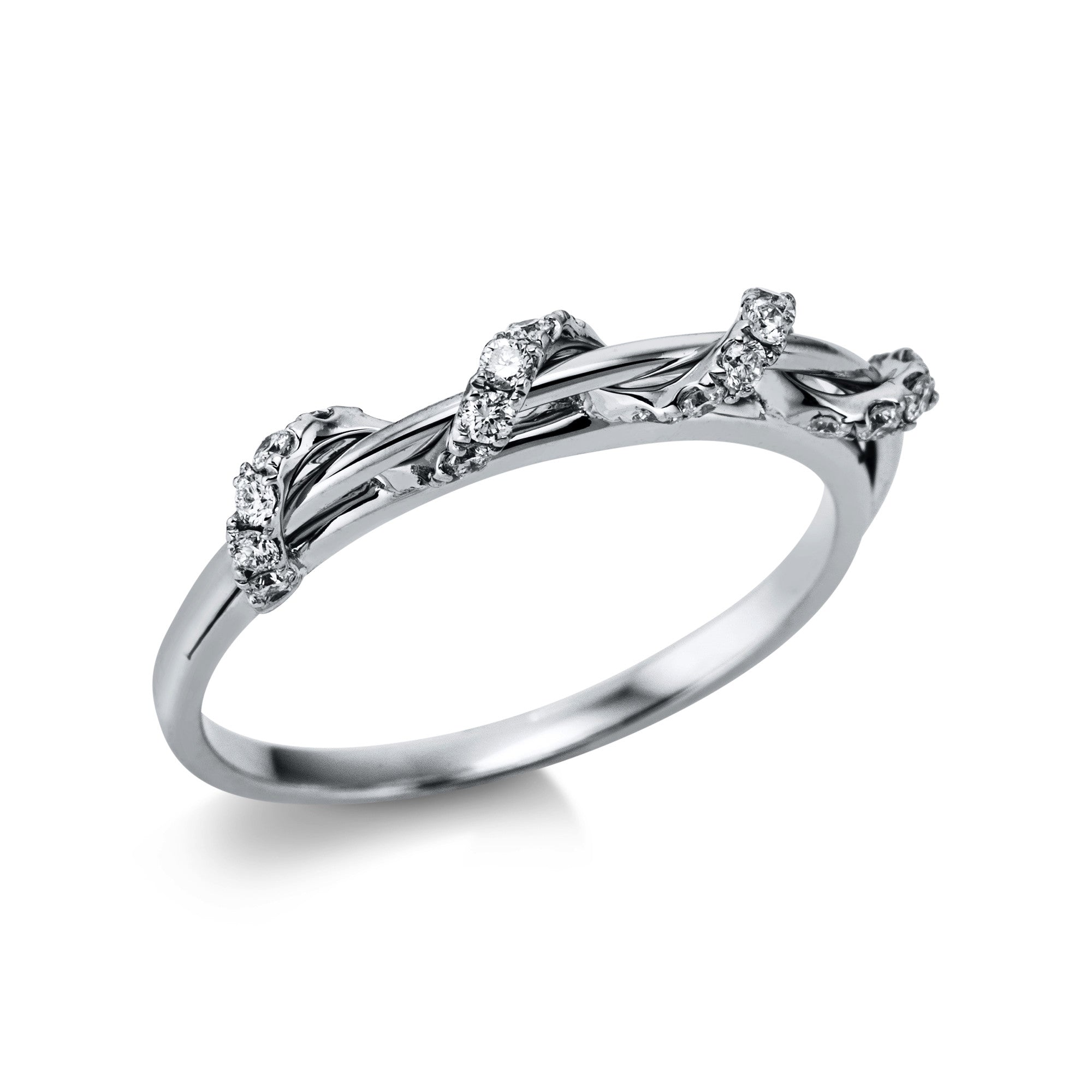
Three rings, one model, three completely different personalities. Place the same ring in yellow, white and rose gold side by side and you can hardly believe that all three are made of exactly three quarters of the same metal. Yet that is precisely what “18 karat” means: 750 of 1,000 parts are pure gold. What creates the colour is the remaining quarter. We explain how yellow, white and rose gold differ, what lies behind 750, 585 and 333 and why your white gold ring deserves a spa day every few years.
- Karat counts in twenty-fourths: 24 karat is almost pure gold (999), 18 karat is 75 per cent (750), 14 karat around 58.5 per cent (585), 9 karat 37.5 per cent (375).
- The colour comes from the alloying metals: yellow gold mixes gold with silver and copper, rose gold with more copper, white gold with palladium or nickel.
- White gold is usually rhodium-plated. The wafer-thin rhodium layer creates the cool shine and wears off over time.
- At 18 karat, the gold content is the same in all three colours. So choose by skin tone, style and the rest of your jewellery, not by “value”.
 Ring Blume, 18 kt yellow gold€3,720
 Ring Blume, 18 kt white gold€3,720
 Ring Blume, 18 kt rose gold€3,720
Prices from the 4D OUTFITTERS web shop, as of 19 October 2026. The prices shown are updated automatically from the shop.
What does 18 karat gold mean?
For gold, the karat is not a unit of weight as it is for diamonds, where the carat describes weight (more in Carat: the first of the 4Cs). For gold it is a fraction. You mentally divide the piece into 24 parts and count how many of them are pure gold. 18 karat therefore means 18 of 24 parts, exactly 75 per cent. In Europe this is stamped as fineness in thousandths, which is why the ring says “750”.
For 14 karat the calculation actually gives 583.3 thousandths. Yet “585” is stamped, rounded up so that the gold content is guaranteed. In Germany, 8 karat (333) is also common. In Austria, gold articles with a fineness of 585 or more must be assayed and hallmarked under the Hallmarking Act (Punzierungsgesetz). Below that they fall outside this law, but the fineness must be clearly stated when sold.
| Karat | Stamp | Gold content | Character |
|---|---|---|---|
| 24 kt | 999 | 99.9 % | Rich yellow, very soft, more for bars and coins than rings |
| 18 kt | 750 | 75 % | The classic for fine jewellery: intense colour, easy to work |
| 14 kt | 585 | 58.5 % | Lighter shades, robust, in Austria the threshold for compulsory hallmarking |
| 9 kt | 375 | 37.5 % | Noticeably paler, common in English-speaking countries |
| 8 kt | 333 | 33.3 % | Customary in Germany, more alloy than gold |
Why is there no pure gold in a ring?
Because it is too soft. Gold has a hardness of only about 2.5 on the Mohs scale, roughly like a fingernail. It is so malleable that, according to Wikipedia, a single gram can be beaten into about one square metre of gold leaf. Wonderful for gilders, less wonderful for a ring that bumps into door handles, keyboards and pushchairs every day. Only alloying it with other metals makes gold hard enough for everyday life – and, along the way, determines its colour.
Yellow gold, white gold, rose gold: what is the difference?
At 18 karat the recipe is always the same: three quarters gold. The last quarter decides. Copper adds warmth and redness and makes the alloy harder, silver shifts the colour from yellow through greenish to white, and palladium decolourises gold to a light grey. The Pforzheim refiner Kalman Hafner, which also processes Fairmined gold, shows what this looks like in practice. According to the Fairmined supplier directory, its 18-karat alloys each contain around 750 thousandths of gold, plus:
Yellow gold
Around 125 thousandths of silver and 119 thousandths of copper, plus a pinch of zinc. A balanced ratio that produces the typical sunny yellow.
Looks traditional and festive and pairs beautifully with warm coloured gemstones.
White gold
Around 130 thousandths of palladium, plus copper and zinc. The palladium takes away gold's colour, leaving a warm light grey.
Usually rhodium-plated, hence brilliant white. The stage for diamonds.
Rose gold
Around 199 thousandths of copper and only 40 thousandths of silver. The more copper, the redder; according to Wikipedia, pure “red gold” consists of 75 % gold and 25 % copper.
Thanks to the copper, slightly harder than yellow gold of the same karat.
Several of our diamond rings are available in the same design in all three gold colours, for example the Ring 1AP18 in yellow gold, white gold and rose gold with 26 brilliant-cut diamonds, or the delicate Ring Blume above. You will find the full selection under gold rings.
Why is white gold rhodium-plated?
Because, to be frank, white gold is not quite white. Without plating it shows a slightly yellowish, warm shimmer, and according to GIA, 18-karat white gold even looks a little warmer than 14-karat, since it contains more gold. That is why it usually receives a wafer-thin coating of rhodium, a platinum-group metal. The rhodium creates the cool, mirror-like white and protects the surface.
The layer wears off over time, especially on the inside of the ring and in places with a lot of friction. Then the warm alloy shows through. That is not a defect, it is physics. A goldsmith can re-plate the ring, and afterwards it looks like it did on day one.
According to Wikipedia, rhodium is one of the rarest elements in the Earth's crust. Only around 30 tonnes are produced worldwide each year, about three quarters of it in South Africa. Between 2016 and 2021 its price swung from under 700 to almost 30,000 US dollars per troy ounce.
Which gold colour suits me?
We consider the strict rules of “cool skin, white gold” and “warm skin, yellow gold” overrated; we have not found reliable evidence for them. The gemmological institute GIA does note that the warm tone of rose gold flatters a very wide range of skin tones. These questions help more with your decision:
- What do you already wear? Watch, earrings, glasses frames. A new ring should either fit into your world or deliberately set a contrast.
- Which stone plays the lead role? White gold makes colourless diamonds shine particularly cool. Yellow gold makes warm stones such as citrine or rutilated quartz even sunnier. Rose gold flatters rose quartz, pink tourmaline and opal, as in the Noën Stellini.
- How robust should it be? Rose gold is slightly more resistant thanks to copper. White gold occasionally needs fresh rhodium.
- Why not all three? Mixing gold colours on your fingers has long ceased to be a style faux pas. A slim ring in each colour makes a wonderful stack.
Is fair gold available in all colours?
Yes, because the colour is only created during alloying at the refinery, long after the gold has left the mine. Fairmined gold from certified small-scale mining can therefore be turned into yellow, white or rose gold just the same. According to Fairmined, buyers pay a premium of 4,000 US dollars per kilo to the mining organisation, and 6,000 US dollars for ecological Fairmined gold extracted without toxic chemicals.
Noën from Pforzheim works exclusively with Fairmined gold, and in our range always in 18 karat and in all three colours. The Join ring, for example, is available as Join M in yellow gold, as Join XS in rose gold and as Join XS in white gold, each polished or matt. We tell the story of where Noën's gold comes from in Over hill and dale: the journey to Noën's Fairmined gold.
How do I care for yellow, white and rose gold?
The good news: gold itself does not rust or tarnish. GIA recommends the same gentle bath for all three colours: 15 to 30 minutes in warm water with a drop of washing-up liquid (GIA optionally mentions a little ammonia), then clean with a soft toothbrush and rinse with warm water. Chlorine and harsh cleaners are off-limits, so take your ring off before the pool. With white gold, it is worth taking it off before showering too, as some soaps and shampoos dull the rhodium layer. Over time, rose gold can develop a slight patina from its copper, which many find especially charming. Suitable cloths, boxes and care products can be found under jewellery care and storage.
Curiosities about gold
What is inside 750 thousandths
- Russian gold
Rose gold was so popular in early 19th-century Russia that it became known there as “Russian gold”. Later, according to GIA, Carl Fabergé used it in his eggs for the Imperial court.
- Green gold from nature
Electrum, a natural blend of gold and silver, is sometimes called “green gold”. The world's first coins, struck in Lydia around 650 BC, were made of electrum.
- All the gold in the world in one cube
According to the World Gold Council, there were around 222,600 tonnes of above-ground gold in mid-2026. Cast into a cube, it would measure only about 22.6 metres along each edge. Almost half of it is jewellery.
- Heavy like hardly anything else
Gold has a density of 19.3 grams per cubic centimetre. A litre of gold therefore weighs over 19 kilograms.
- One gram, one square metre
A single gram of gold can be beaten into a wafer-thin sheet of about one square metre.
- Rhodium, pricier than gold
The white protective layer of many white gold rings is made of a metal that at times cost many times the price of gold.
- 14 karat: Mathematically 583.3 thousandths; 585 is stamped so that the gold content is reliably reached.
- Nickel: Some white gold alloys contain nickel. Under EU REACH rules, jewellery in prolonged contact with the skin may release at most 0.5 micrograms of nickel per square centimetre per week, piercing posts at most 0.2.
- Palladium white gold contains no nickel. GIA advises people with a nickel allergy to avoid nickel white gold.
- Zinc is present in small amounts in all three Hafner alloys, from 5 to 36 thousandths.
- Hallmarks in Austria: Gold articles of 585 thousandths or more are subject to compulsory assaying and hallmarking under the Hallmarking Act.
Frequently asked questions about yellow, white and rose gold
What is the difference between yellow, white and rose gold?
At 18 karat, all three contain 75 per cent pure gold. The difference lies in the remaining 25 per cent: yellow gold contains silver and copper, rose gold more copper, white gold palladium or nickel. White gold is also usually rhodium-plated.
What does 750 in a ring mean?
750 is the fineness in thousandths: 750 of 1,000 parts are pure gold. That corresponds to 18 karat.
Is 18 karat better than 14 karat?
18 karat contains more gold, has a more intense colour and is considered the standard for fine jewellery. 14 karat (585) is slightly lighter and also robust. Better is whatever suits you and your piece.
Is white gold more valuable than yellow gold?
At the same karat, the gold content is identical. Price differences tend to come from the alloying metals, the craftsmanship and the rhodium plating.
Why is my white gold ring turning yellowish?
Because the rhodium layer wears off over time and the slightly warm white gold alloy shows through. A goldsmith can re-plate the ring.
Is fair gold available in all colours?
Yes. The colour is only created during alloying. Noën, for example, makes jewellery from 18-karat Fairmined gold in yellow, white and rose gold.
The best place to decide is not on a screen but on your hand. Come to our boutique in Bregenz and try yellow, white and rose gold side by side – or stacked. Or send us a message, we are happy to advise you personally. You will find the full selection under fine gold jewellery.
Your 4D OUTFITTERS team, Bregenz
Sources: Wikipedia: Fineness · Wikipedia: Gold · Wikipedia: Colored gold · Fairmined: Kalman Hafner · Fairmined Standard · GIA: Yellow Gold vs. Rose Gold · GIA: White Gold vs. Silver · GIA: Buying Guide · Wikipedia: Rhodium · Wikipedia: Electrum · World Gold Council · BMF: Punzierung · Wikipedia: Nickel Directive






Leave a comment
This site is protected by hCaptcha and the hCaptcha Privacy Policy and Terms of Service apply.