
Iso E Super, Ambroxan, Hedione: The Stars of the Scent Lab
A scent that smells of almost nothing yet collects compliments. A material once supplied only by sperm whales. And a jasmine that has never seen a flower: behind many great perfumes stand single aroma molecules such as Iso E Super, Ambroxan and Hedione. We explain what these materials are, where they come from, why "synthetic" is no synonym for "cheap" in perfumery – and in which fragrances from our shelves you can smell them pure or in a leading role.
- Aroma molecules are single odorants with a precisely defined structure. Perfumers use them like paints from a tube.
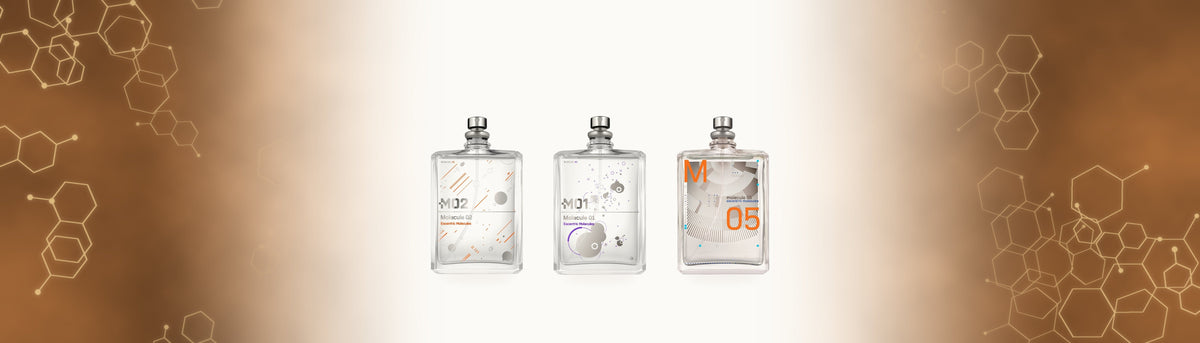
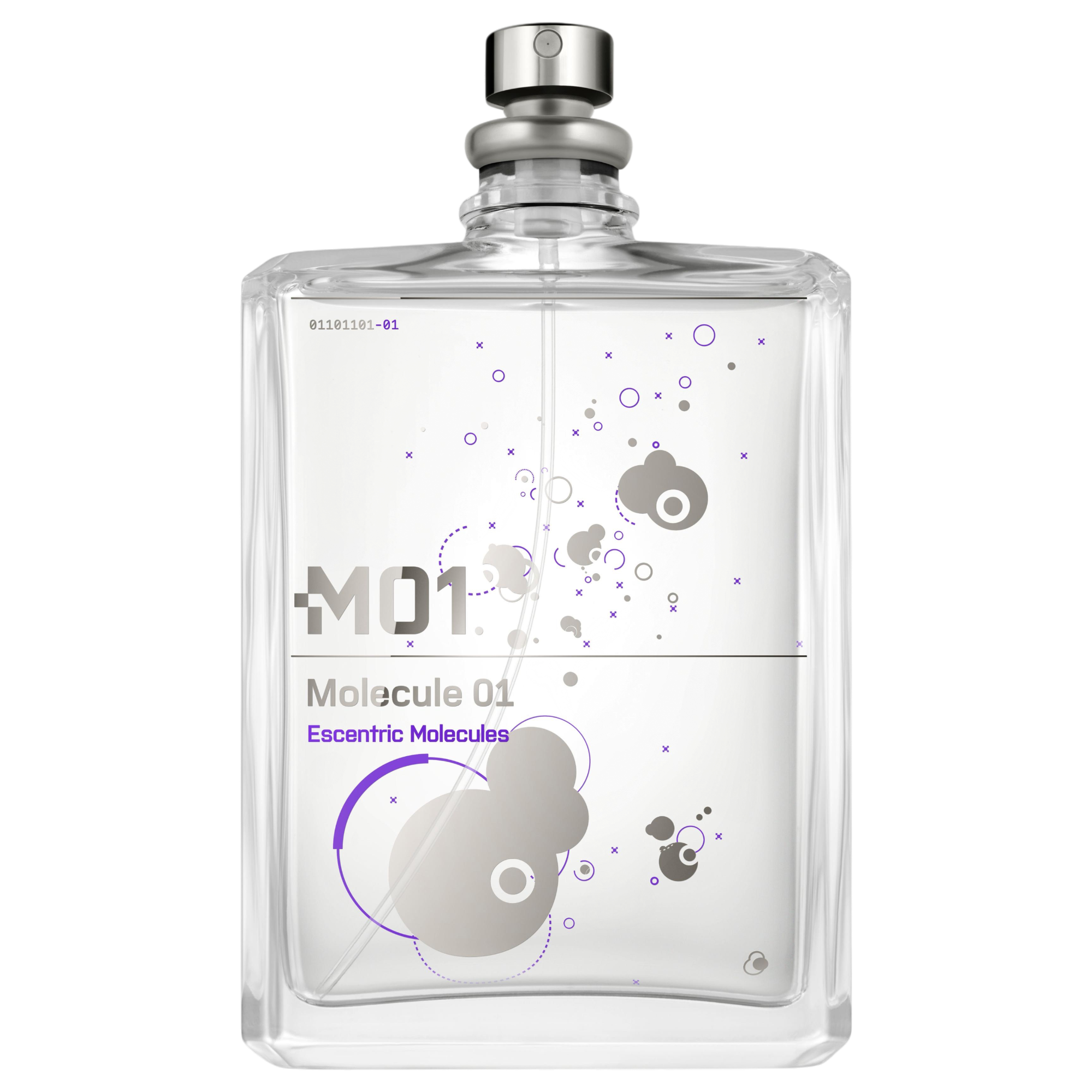
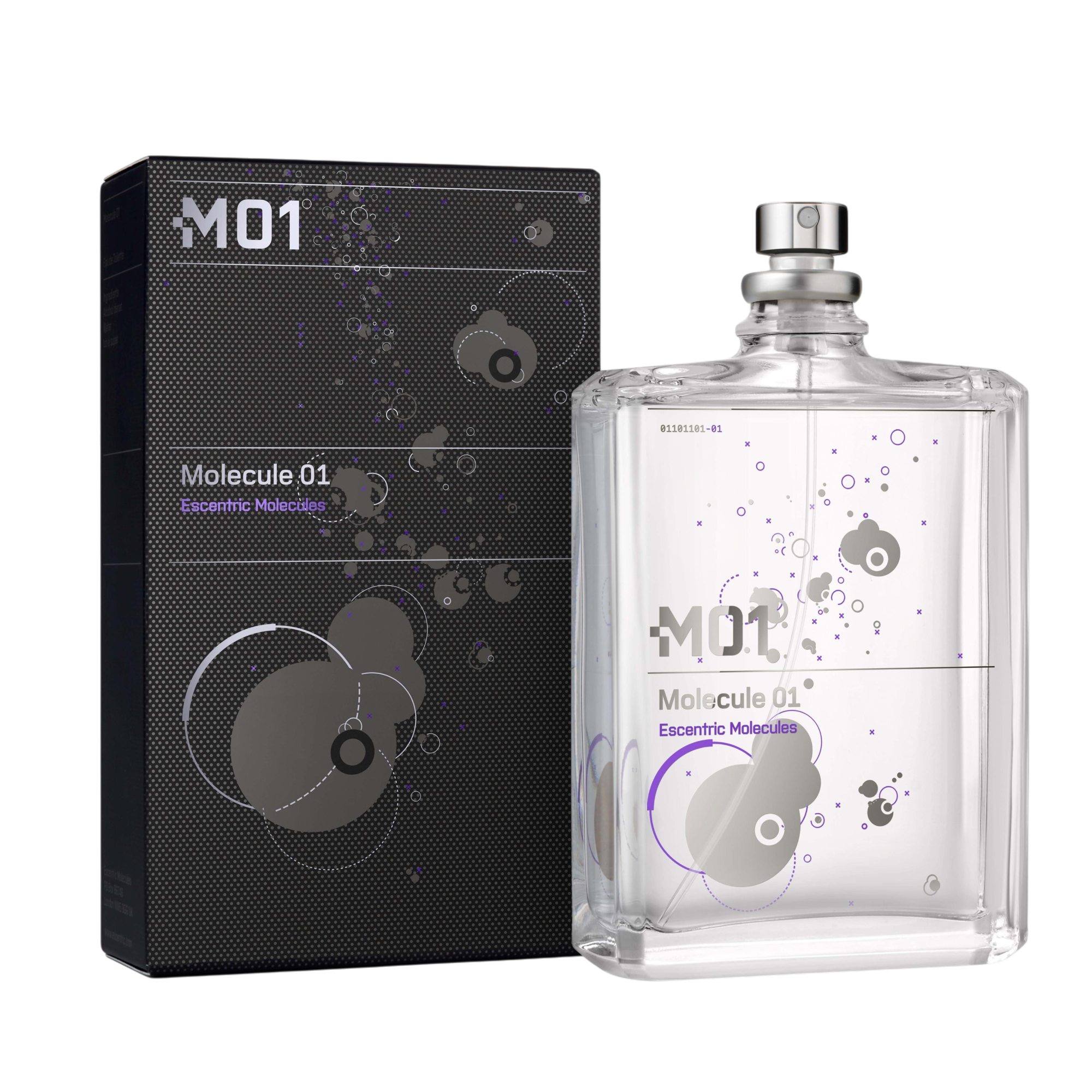
- Iso E Super (IFF, patented 1975) smells velvety and woody and is the only ingredient in Molecule 01.
- Ambroxan replaces ambergris from the sperm whale and is made today from clary sage. Pure: Molecule 02.
- Hedione (Firmenich, discovered 1958) brings jasmine radiance and airiness. It became famous in 1966 with Eau Sauvage.
- Synthetic does not mean cheap: many molecules spare rare natural materials and make fragrances possible in the first place.
What are aroma molecules, actually?
An aroma molecule is a single odorant with a known chemical structure. An essential oil, by contrast, is a mixture of often hundreds of components. Rose oil is a whole orchestra; a molecule like Hedione is a single violin.
For perfumers this is a gift. A molecule smells the same from batch to batch, is reliably available and can be dosed with great precision. Many notes you read in a fragrance pyramid – "cashmere wood", "sea breeze", "amber" – are really such molecules. Nature often has no oil of its own for them.
Is synthetic perfume cheaper than natural perfume?
No, and that may be the most stubborn misunderstanding in the industry. Modern perfumery even begins with synthesis: coumarin, the hay-like scent of the tonka bean, was first made artificially by William Henry Perkin in 1868. In 1882 Houbigant turned it into an entire fragrance family with Fougère Royale: the fougères. You can read more about the house in our portrait The history of Houbigant.
Synthetic molecules have three solid advantages. They spare scarce natural materials, they make smells possible that no plant provides, and they often last longer on the skin. Expensive or affordable is decided by the quality of the composition, not by the question "nature or lab". Most great niche fragrances are a blend of both.
What is Iso E Super – and why can you barely smell Molecule 01 sometimes?
Because Iso E Super is a master of the quiet tones. The material was developed at the fragrance house IFF and patented in 1975. IFF describes it as smooth, woody and ambery, with a "velvet-like" sensation. According to its data sheet, it lasts more than 48 hours.
Iso E Super became famous as a silent team player. According to a review in the Beilstein Journal of Organic Chemistry, Féminité du Bois by Shiseido (1992) consists of 43 per cent Iso E Super, Dior Fahrenheit (1988) of 25 per cent. Molecule 01 by Escentric Molecules takes this to the extreme: 100 per cent, a single material in the bottle.
And the "I can't smell anything" phenomenon? It has a name: specific anosmia, the inability to smell one particular substance while the nose otherwise works normally. Researchers at TU Dresden tested more than 1,600 people and concluded that almost everyone has at least one such scent gap. There is no robust study on Iso E Super itself, but many people know the experience: you barely smell anything, and the person next to you asks about your perfume. On top of that the effect comes and goes, because the nose gets used to the material.
 Molecule 01100 % Iso E Super€ 150
 Molecule 02100 % Ambroxan€ 150
 Molecule 04100 % Javanol€ 150
 Molecule 05100 % Cashmeran€ 150
Live prices from our shop, as of 22 Oct 2026. You will find all fragrances by Escentric Molecules in the Escentric Molecules collection.
What does Ambroxan have to do with the sperm whale?
A great deal. Ambergris is a substance from the gut of the sperm whale that drifts in the sea and matures over years in sun and salt water. Its main component, ambrein, has hardly any smell of its own. Only when it oxidises do the materials form that carry the famous warm, slightly salty ambergris scent, above all ambroxide.
Firmenich (today dsm-firmenich) researched ambergris from the 1930s and synthesised Ambrox from that work in the 1950s. The starting material is plant-based: sclareol from clary sage. The whale has been on a break ever since. How valuable real ambergris is was shown by a find off Yemen in 2021: 127 kilograms, valued at 1.5 million US dollars. Incidentally, trade in ambergris is banned or strictly restricted in the USA, Australia and India.
You can smell pure Ambroxan in Molecule 02. In Escentric 02, according to the brand, it sits at the centre of a composition with jasmine buds at 13.5 per cent. As a warm, clean foundation it carries, for example, Icarus 347 by Maison Noir and This is not a blue bottle 1.5 by Histoires de Parfums.
Some odorants work in the tiniest amounts. For the strongest variants of the musk Galaxolide, the scientific literature gives an odour threshold of 1 nanogram per litre of air or less. An Olympic swimming pool holds 2,500 cubic metres, or 2.5 million litres. Mathematically, 2.5 milligrams are enough to make that much air smellable. A drop of about 50 milligrams would therefore cover around 20 pools – at least.
Why does Hedione make fragrances so radiant?
Hedione is jasmine without the flower. The chemist Edouard Demole came across the material at Firmenich in 1958 while working on methyl jasmonate, a small but important component of jasmine. dsm-firmenich today describes Hedione as elegant, transparent and floral like jasmine, with a refreshing hint of citrus.
The breakthrough came in 1966 with Eau Sauvage, composed by Edmond Roudnitska for Dior. It was the first big success with Hedione. Since then the material has appeared in countless perfumes, because it brings air into a composition: fragrances seem brighter, bigger, more "diffusive", without getting louder. According to the manufacturer, Hedione is typically used at 2 to 15 per cent in perfumes.
What it sounds like when someone deliberately turns up the dose, you can smell in High Frequency by Initio: there, an overdose of Hedione over magnolia and almond creates an almost electric glow.
Which molecules smell of the sea, candyfloss and cashmere?
This is where perfume history becomes almost comical. Calone, the epitome of the "sea breeze", was discovered in 1966 at the pharmaceutical company Pfizer. The chemists were actually looking for tranquillisers. In 1989 New West for Her by Aramis contained 1.2 per cent Calone and ushered in the era of aquatic fragrances that shaped the 1990s.
Ethyl maltol smells sweet, caramel-like, of strawberry jam and candyfloss. According to the literature, it first appeared in perfumery in 1992 in Angel by Thierry Mugler, a fragrance considered the ancestor of modern gourmands. If you love this family, our article Gourmand perfume: 7 scents good enough to eat has suitable candidates for autumn.
And then there are the woods that do not grow in any forest. Javanol by Givaudan smells creamy like sandalwood with a hint of rose. According to the manufacturer it works at below 0.1 per cent and is about eight times more effective in wash tests than the strongest sandalwood product previously available. It is the only ingredient in Molecule 04. Cashmeran brings the soft, musky woodiness many describe as "cashmere", for instance in Molecule 05 or in Replica By the Fireplace by Maison Margiela. Another example of a modern wood from the lab is presented in our article on Akigalawood.
| Molecule | Smells of | Origin | With us pure or in a leading role |
|---|---|---|---|
| Iso E Super | velvety, woody, ambery | IFF, patent 1975 | Molecule 01, Escentric 01 |
| Ambroxan | warm, mineral, slightly salty | Firmenich, 1950s | Molecule 02, Escentric 02 |
| Hedione | jasmine, transparent, citrusy | Firmenich, discovered 1958 | High Frequency (Initio) |
| Javanol | creamy sandalwood, rose | Givaudan | Molecule 04 |
| Cashmeran | soft, woody, musky | synthetic woody material | Molecule 05 |
| Calone | sea breeze, melon | Pfizer, 1966 | – |
Molecule or Escentric: which bottle suits you?
Escentric Molecules was founded in London in 2006 by the perfumer Geza Schoen and Paul White. Schoen had previously worked for more than ten years at Haarmann & Reimer, today part of Symrise. The idea: according to the brand, each "Molecule" contains only its molecule, while each "Escentric" shows the same molecule in a complete composition. Escentric 01 contains around 65 per cent Iso E Super, Escentric 02 13.5 per cent Ambroxan.
Our rule of thumb from the boutique: if you want a scent that smells like your own skin, only a little more beautiful, start with a Molecule. If you prefer to wear a recognisable story, with citrus, pepper or jasmine, reach for the Escentric. And if you like to mix: Molecule 01 is a grateful partner for combining, and you will find tips in our 20 tips for perfume layering.
 Escentric 01Iso E Super, lime, pepper€ 155
 Escentric 02Ambroxan, jasmine buds€ 155
 High FrequencyHedione, magnolia, almond€ 280
 Icarus 347Apple, Ambroxan, tonkafrom € 125
Live prices from our shop, as of 22 Oct 2026.
Curiosities from the scent lab
From conifers to candyfloss
- Vanilla from a conifer
In 1874 Haarmann and Tiemann first produced vanillin, from a substance in the sap of conifers. This led to the company Haarmann & Reimer, today part of Symrise.
- A mistake in the lab?
Chanel No. 5 (1921) used aldehydes in previously unknown quantities. Legend has it that a dilution error in the lab helped. It is not documented, but the story is told with pleasure.
- A tranquilliser that smelled of the sea
Calone turned up at Pfizer in 1966, while the researchers were actually working on tranquillisers.
- Almost half a perfume
According to a scientific review, Féminité du Bois by Shiseido consists of 43 per cent Iso E Super.
- The whale takes a break
Ambroxan is made from sclareol, a substance from clary sage. No sperm whale has to "deliver" for your perfume today.
- Everyone has a scent gap
According to a TU Dresden study of more than 1,600 people, almost everyone is blind to at least one odorant. Training can improve sensitivity.
- Iso E Super: molecular formula C16H26O, developed at IFF, US patent 3,929,677 by John B. Hall and James M. Sanders (1975).
- Ambroxan: CAS number 6790-58-5; as a racemate (CAS 3738-00-9), dsm-firmenich has sold the material as Cetalox since 1993.
- Hedione: chemically methyl dihydrojasmonate, described by Demole in Helvetica Chimica Acta in 1962; odour threshold around 15 ppb.
- Coumarin: isolated from tonka beans in 1820, synthesised by Perkin in 1868, used in Fougère Royale in 1882.
- Calone: chemically 7-methyl-2H-1,5-benzodioxepin-3(4H)-one, also called the "watermelon ketone" because of its note.
Frequently asked questions about aroma molecules
What is Iso E Super?
Iso E Super is a synthetic odorant by IFF with a velvety, woody, slightly ambery smell. It was patented in 1975 and appears in many well-known perfumes. You can smell it pure in Molecule 01.
Why can't I smell Molecule 01 on my skin?
Iso E Super is very quiet and the nose gets used to it quickly. Some people also barely perceive the material. Others around you often smell it more clearly than you do.
Is Ambroxan the same as ambergris?
Not quite. Ambergris is a natural material from the sperm whale. Ambroxan is a molecule that reproduces an important odour component of ambergris. Today it is made from sclareol from clary sage.
What is Hedione used for in perfume?
Hedione smells transparently of jasmine and makes compositions brighter and airier. It has been part of very many fragrances since Eau Sauvage (1966).
Are synthetic fragrance materials worse than natural ones?
No. Synthetic molecules spare rare natural materials, smell consistent and enable notes that nature does not provide. The quality of a perfume depends on the composition, not on the origin of individual materials.
Can I test Molecule fragrances first?
Yes. With every bottle of 30 ml or more we include a free sample of the same fragrance. With orders from € 90 you also receive four samples of your choice; simply note your wishes in the comment field of the cart.
Smell first, then fall in love
You understand molecules best with your own nose. With every bottle of 30 ml or more we include a free sample of exactly this fragrance. With orders from € 90 you also receive four samples of your choice. A lovely sample wish for a self-experiment: Molecule 01 and Escentric 01 side by side – once pure, once composed. Simply note your wishes in the comment field of the cart; if in stock, we will gladly include them. From € 200 order value, standard shipping to Austria and Germany is free.
Or visit our boutique in Bregenz and test the molecules on your skin. We will also tell you whether the person opposite can smell you when you no longer notice anything yourself. How the concentrations differ is explained in our article Eau de Toilette, Eau de Parfum or Extrait.
Your 4D Outfitters team, Bregenz
Sources: IFF: Iso E Super · Beilstein J. Org. Chem. 15 (2019): Iso E Super · Wikipedia: Iso E Super · dsm-firmenich: Ambrox · dsm-firmenich: Cetalox · dsm-firmenich: Hedione · Wikipedia: Hedione · Wikipedia: Ambergris · Wikipedia: Calone · Wikipedia: Ethyl maltol · Givaudan: Javanol · Wikipedia: Galaxolide · Wikipedia: Coumarin · Symrise: Vanillin · TU Dresden: Croy et al. 2015 · Escentric Molecules: About




Leave a comment
This site is protected by hCaptcha and the hCaptcha Privacy Policy and Terms of Service apply.