
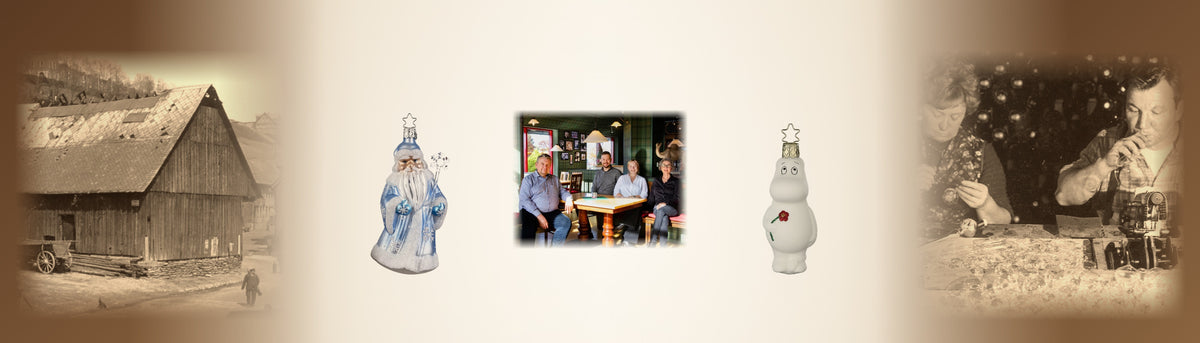
Inge-Glas: 15 Generations of Glassblowers, from Lauscha to Neustadt
In 1597 a man named Christoph Müller founded a glassworks in the Thuringian Forest. More than 400 years and 15 generations later, the baubles made by his descendants hang on Christmas trees all over the world. In between lie a village that became famous for Christmas ornaments, an escape across the inner-German border and a manufactory in Neustadt near Coburg where every piece is still blown by mouth today. This is the story of Inge-Glas, and it is more gripping than many a Christmas film.
- Origins: In 1597 the family's ancestor Christoph Müller and Hans Greiner founded the glassworks in Lauscha, the cradle of glass Christmas ornaments.
- A new start: In 1951 Heinz Müller-Blech fled Thuringia for the West and founded a glassblowing workshop for Christmas ornaments in Neustadt near Coburg, just a few metres behind the border.
- Today: The family runs the company in its 15th generation, with more than 100 employees and a treasure trove of around 15,000 moulds.
- Hallmark: Since 1987 every piece has carried the little star crown as its mark of origin.
Where does the story of Inge-Glas begin?
In 1597, in the Thuringian Forest. On 10 January, Hans Greiner and Christoph Müller received permission from Duke Johann Casimir of Saxe-Coburg to operate a glassworks. A whole village grew up around it: Lauscha. Inge-Glas explicitly calls Christoph Müller “our ancestor” and the Lauscha works the family's mother glassworks.

For two and a half centuries Lauscha was one glassmaking village among many. Then, in 1847, according to local history, a Lauscha glassblower invented glass decorations for the Christmas tree. The first written order for Christmas baubles dates from 1848, for six dozen pieces. An idea became an export hit: glass fruit, nuts, baubles and figures from Lauscha were soon travelling all over the world.
Why so many early glass ornaments look like apples and nuts is a story in itself. We tell it in Champagne, Caviar, Pretzels: Why Food Hangs on the Christmas Tree.
Why did the family move from Lauscha to Neustadt near Coburg?
Because of world politics. After the Second World War, the Red Army occupied southern Thuringia in July 1945, and from 1949 Lauscha belonged to the GDR. In 1951 Heinz Müller-Blech fled Thuringia for the West and founded a glassblowing workshop for Christmas ornaments in Neustadt near Coburg. Inge-Glas describes the location with a remarkable detail: just a few metres behind the border. The old home was within sight, yet out of reach.

And the name? Among American retailers it is said to go back to Inge, the wife of Heinz Müller-Blech. What is documented is that the business was listed in old trademark registers as “Glasbläserei Inge Müller-Blech”. The company itself does not explain the origin of the name on its website. We think a family business named after a woman suits a house where the next generation is now taking the helm very nicely.
Who runs Inge-Glas today?

Inge-Glas is still in family hands. Klaus Müller-Blech is managing director and shareholder. His daughter Marie Müller-Blech joined the company in 2019, built up the marketing department and three online shops, and has been a shareholder since 1 September 2022. She is gradually taking over the management, together with managing director Tilo Hannemann. Alongside Inge-Glas, the company Inge's Christmas Decor also includes the brands Holly & Jolly and goldmarie. According to the company, more than 100 people work there, and its ornaments go to over 40 countries.
How is an Inge-Glas ornament made?
In many steps, and almost all of them are true handwork. Inge-Glas describes the process like this:
 Step 1
Design and mould
Every figure begins as a drawing. From it a mould is made, into which the glass is later blown. Around 15,000 moulds from two centuries are kept in the archive.
 Step 2
Blowing and silvering
Baubles are blown freehand at the flame, figures in the mould. Each piece is then filled with a silver solution that settles inside as a mirror.
 Step 3
Painting and finishing
Up to 60 steps, each piece by a single painter. Eyes and brows are set by hand, and finally the star crown is added.
At the end come feathers, glass threads or sparkling stones, before every piece passes a quality check. Since 1987 the star crown has sat on top: the golden mark of origin by which you recognise Inge-Glas at once. Incidentally, the silvering on the inside is the reason the colours glow so brightly: the light is reflected by the silver and shines through the layer of paint.

Which Inge-Glas classics can you find at our shop?
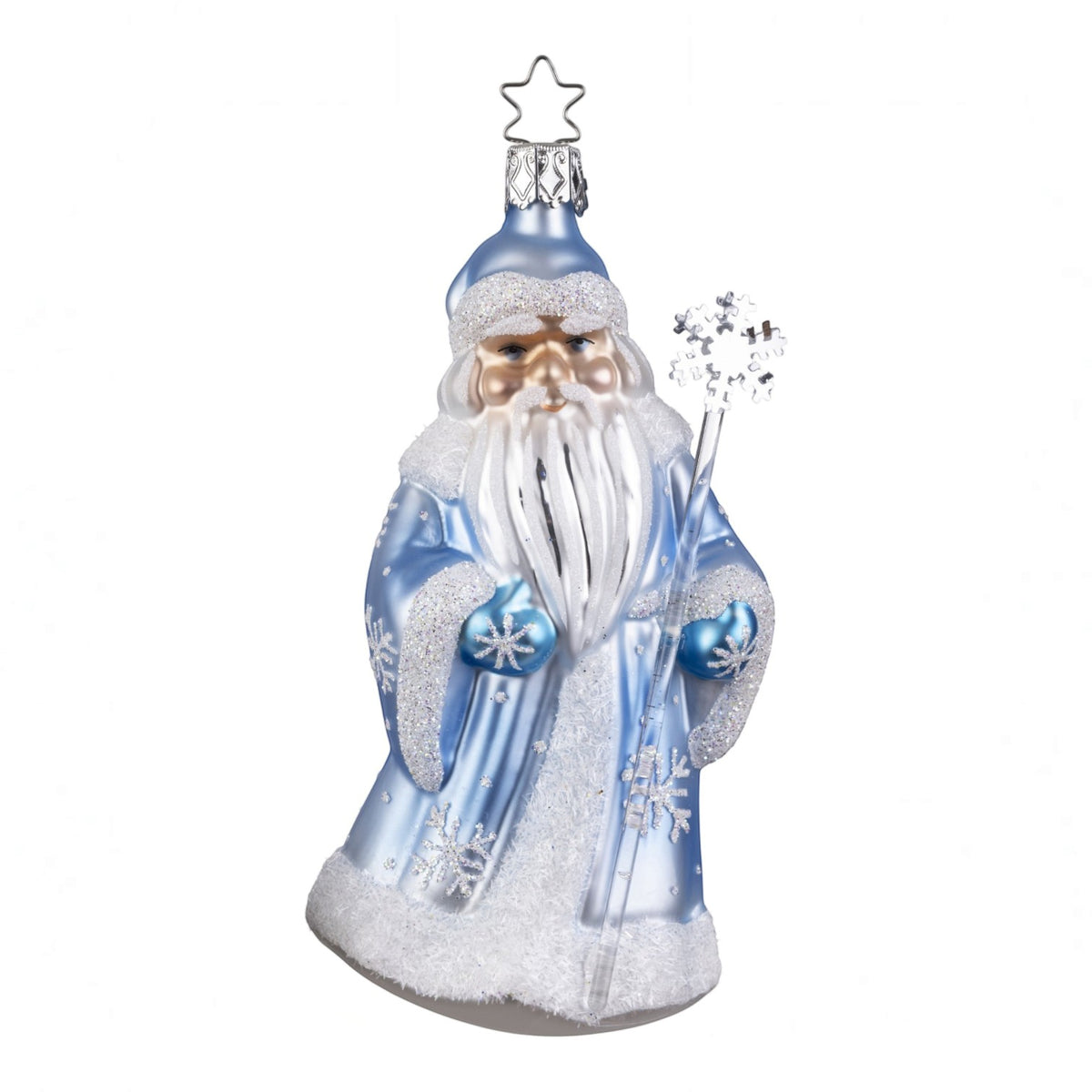
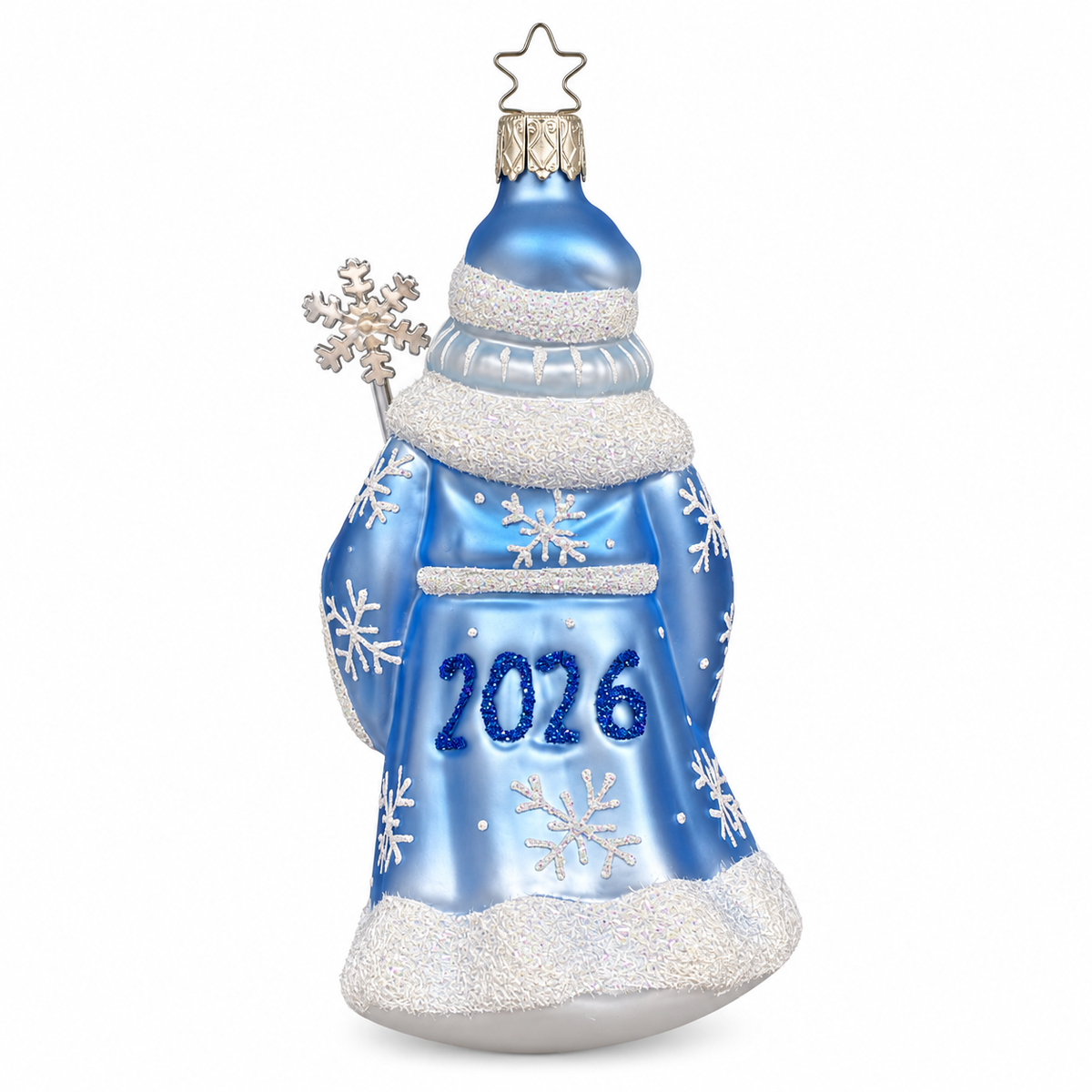
In Bregenz and online we carry a wide selection from the manufactory, from the classic bauble to figures with a wink. Four pieces that show how broad the repertoire is:


Each of these pieces has its own story: the Father Frost annual ornament, the true story of the Christmas pickle and the Moomins on the Christmas tree.
Curiosities about Inge-Glas
What you should know about the manufactory
- A village from a glassworks
Lauscha was not founded first and then given a glassworks. It was the other way round: the village grew up around the works of 1597.
- A hands-on Christmas museum
The Alte Weihnachtsfabrik in Neustadt near Coburg houses a historic Christmas museum and a treasury of old tools and moulds.
- Children at the pipe
On the Advent Sundays from 22 November to 20 December 2026, glassblowers demonstrate their craft there, and children aged five and over may blow their own bauble.
- Silver, not paint
The glow does not come from the paint alone but from a wafer-thin layer of silver inside every piece.
- 15 generations
Hardly any family business in Europe can trace its roots back this far. Inge-Glas is now in its 15th generation.

- 1597: licence for the Lauscha glassworks granted to Hans Greiner and Christoph Müller.
- 1847/1848: first glass Christmas ornaments in Lauscha, first documented order of Christmas baubles.
- 1951: new foundation by Heinz Müller-Blech in Neustadt near Coburg.
- 1987: introduction of the star crown as the mark of origin.
- Today: around 15,000 moulds, more than 100 employees, exports to over 40 countries.
Frequently asked questions about Inge-Glas
Where is Inge-Glas made?
In the company's own manufactory in Neustadt near Coburg in Upper Franconia. Every piece is mouth-blown there, silvered on the inside and painted by hand.
How long has Inge-Glas existed?
The family's glassblowing tradition goes back to Lauscha in 1597. The company has been based in Neustadt near Coburg since 1951.
How do I recognise genuine Inge-Glas?
By the golden star crown that has sat on every piece as the mark of origin since 1987.
Who runs Inge-Glas today?
Managing director and shareholder Klaus Müller-Blech, his daughter Marie Müller-Blech as shareholder, and managing director Tilo Hannemann.
Can you visit the manufactory?
Yes. During the season, the Alte Weihnachtsfabrik in Neustadt near Coburg has a shop, a café, a historic Christmas museum and glassblowing demonstrations on the Advent Sundays.
Marvel first, then decorate
An Inge-Glas ornament is not a throwaway item but a piece that goes back on the tree year after year and one day passes to the next generation. You can find the whole selection in our Inge-Glas collection, but it is even lovelier to see the pieces in the light of our boutique in Bregenz. Shipping is free from € 200. You can read more about glass Christmas ornaments in Christmas ornaments in a class of their own.
Your 4D OUTFITTERS team, Bregenz
Sources: Inge-Glas – Our Manufactory · Inge-Glas – Manufactory & Craft · Inge-Glas – Company · Inge-Glas – New shareholder · Die Alte Weihnachtsfabrik · Wikipedia – Lauscha · Wikipedia – Christbaumschmuck · US trademark register



Leave a comment
This site is protected by hCaptcha and the hCaptcha Privacy Policy and Terms of Service apply.